Visiting a food pantry for the first time can feel uncertain, especially if you have never needed food assistance before. You may wonder what the process looks like, whether you qualify, what documents to bring, or if you’ll feel out of place.
The good news is that most food pantries are designed to make the experience as welcoming, respectful, and stress-free as possible. They exist to help individuals and families access nutritious food during difficult times, whether those challenges are temporary or ongoing.
If you are looking for food assistance in DeSoto, Texas, or the surrounding Dallas area, understanding what to expect before you arrive can make your first visit much easier.
In this guide, you’ll learn how food pantries work, what to bring, what happens during your visit, the types of food you may receive, and how organizations like MT Hope House of Texas provide not only food assistance but also connections to additional community resources that support long-term stability.
What Should You Expect at a Food Pantry?
During your first food pantry visit, you may be asked to check in, provide basic household information, and complete a short registration process. Depending on the pantry, you may either choose groceries that fit your household’s needs or receive a prepared food box. Some pantries require appointments or identification, while others have fewer requirements. Because every organization operates differently, contacting the pantry before your visit is always the best way to prepare.
Why Do People Visit Food Pantries?
Food insecurity can affect anyone.
Unexpected medical bills, rising grocery prices, reduced work hours, caring for children or aging parents, or recovering from a personal emergency can quickly stretch a household budget.
According to the U.S. Department of Agriculture, approximately 18.3 million U.S. households experienced food insecurity in 2024, demonstrating that millions of families rely on community resources when circumstances become difficult.
Using a food pantry is not a sign of failure. It is a practical way to ensure you and your family have access to nutritious food while working through life’s challenges.
What Is a Food Pantry and How Does It Work?
A food pantry is a community organization that distributes groceries directly to people who need assistance.
Food pantries receive food from food banks, grocery stores, farms, businesses, nonprofit organizations, and community donations. Depending on how a pantry operates, visitors may:
- Select groceries themselves in a client-choice pantry
- Receive a prepacked food box
- Pick up food through a drive-through distribution
- Visit a mobile food pantry
- Schedule an appointment for food assistance
Every pantry operates a little differently, so understanding the local process before your visit helps avoid surprises.
Who Qualifies for Food Pantry Assistance?
Eligibility depends on the organization.
Many food pantries assist individuals and families experiencing temporary financial hardship, while others participate in specific state or federal food programs that have additional requirements.
Working adults, seniors, veterans, families with children, students, and people facing unexpected financial difficulties may all qualify for assistance.
Some food pantries serve specific ZIP codes or counties, while others welcome anyone in need.
If you’re planning to visit MT Hope House’s Food Pantry Program, contacting the organization before your visit allows staff to explain current eligibility guidelines, appointment availability, and any documentation you may need.
How Should You Prepare Before Your Visit?
A few minutes of preparation can make your visit smoother.
Before leaving home:
- Confirm operating hours
- Ask whether appointments are required
- Verify the pantry serves your area
- Ask which documents you should bring
- Bring reusable grocery bags or boxes
- Pack an insulated bag if you expect refrigerated food
- Arrange transportation if necessary
If you are walking, consider bringing a small folding cart or wagon to make carrying groceries easier.
What Documents Do You Need?
Every pantry has different requirements, but bringing the following items can be helpful:
- Photo identification
- Proof of address, if requested
- Information about the number of people in your household
- Appointment confirmation, if applicable
- Reusable bags or boxes
If you do not have one or more of these documents, do not assume you cannot receive help. Call the pantry and explain your situation. Staff may be able to offer alternative options or connect you with another organization that can assist you.
What Happens During Your First Food Pantry Visit?
Although every location is different, most visits follow a similar process.
Check-in
When you arrive, you’ll usually be greeted by a volunteer or staff member who will explain the process.
If several households are waiting, you may be asked to wait in a designated area or remain in your vehicle until your turn.
Registration
First-time visitors often complete a short registration form.
You may be asked for:
- Your name
- Household size
- ZIP code or address
- Basic income information, depending on the pantry
- Dietary concerns
This information helps determine eligibility, estimate food quantities, and support program reporting requirements.
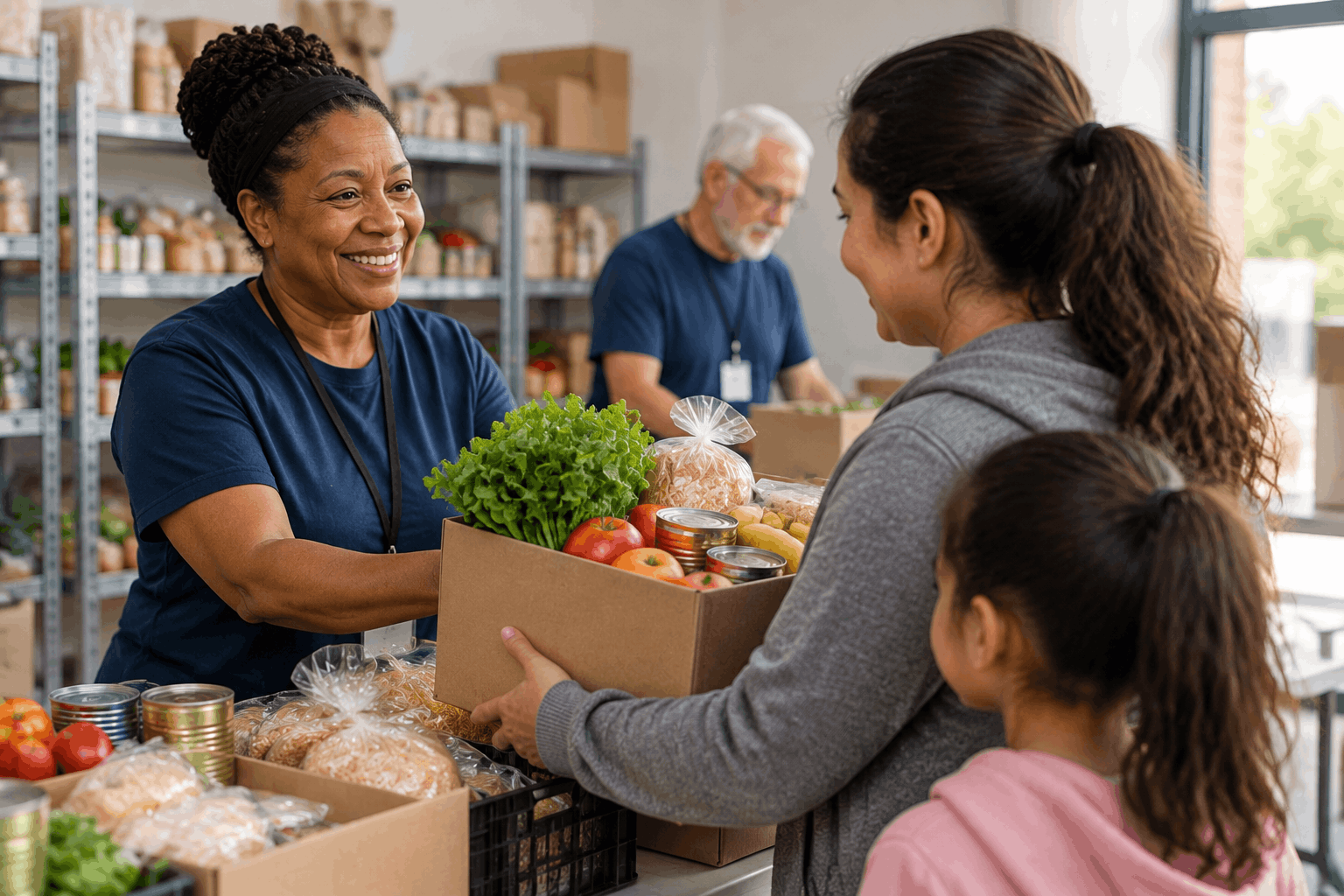
Receiving Food
Depending on the pantry, you may:
- Shop through a client-choice pantry
- Receive a prepared food box
- Pick up groceries curbside
- Participate in a drive-through distribution
Volunteers are often available to help carry groceries if needed.
Before leaving, ask when you can return if you need future assistance.
What Kind of Food Can You Receive?
The available groceries depend on donations, inventory, and seasonal availability.
Many food pantries provide items such as:
- Fresh fruits and vegetables
- Bread and bakery products
- Rice, pasta, and cereal
- Canned vegetables and fruit
- Beans and shelf-stable protein
- Dairy products
- Frozen meat when available
- Soup and pantry staples
- Baby food or infant formula
- Personal hygiene items
No two visits are exactly alike, and available food changes throughout the year.
Can You Choose Your Own Groceries?
Some food pantries use a client-choice model that allows visitors to select available foods based on their family’s preferences and dietary needs.
Others distribute prepacked food boxes, particularly during large community distributions or emergency response events.
Neither approach is better than the other. Each helps ensure food is distributed fairly and efficiently based on the pantry’s available resources.
What If You Have Dietary Restrictions?
If you have food allergies, diabetes, religious dietary needs, or other medical concerns, let staff know during registration.
While every pantry cannot guarantee specialized foods, many will do their best to identify suitable options or refer you to another resource when available.
If you have limited cooking facilities, mention that as well. Staff may recommend foods that require little or no preparation.
How Much Food Will You Receive?
The amount of food provided depends on several factors, including:
- Household size
- Current inventory
- Distribution guidelines
- Visit frequency
Most food pantries provide supplemental groceries designed to help households stretch their food budget rather than cover every meal for an extended period.
If you have questions about future visits, ask staff before leaving.
How Often Can You Visit?
There is no national standard.
Some organizations provide food weekly, while others serve households monthly or on another schedule.
Because policies vary, ask about return visits during your first appointment.
Common First-Time Concerns
Many people hesitate to visit a food pantry because they feel embarrassed or worry they will be judged.
The reality is that volunteers and staff understand that financial situations change. Many visitors are working, caring for families, recovering from unexpected emergencies, or simply adjusting to higher living costs.
Food pantries exist to support the community, not to judge it.
If you have questions during your visit, do not hesitate to ask. Staff are there to help you understand the process and make you feel comfortable.
Food Assistance Is Often the First Step
Food support can solve an immediate need, but many households also benefit from additional community resources.
MT Hope House serves as more than a food pantry. Through its Community Resource Hub, visitors can also learn about services such as Community Outreach and Resource Navigation, Workforce Development, youth programs, wellness initiatives, and other opportunities that help individuals and families build long-term stability.
If your needs extend beyond groceries, speaking with the MT Hope House team may help you discover additional resources available within the community.
First-Time Food Pantry Checklist
Before your visit:
- ✔ Check the pantry’s hours
- ✔ Confirm whether you need an appointment
- ✔ Ask about eligibility requirements
- ✔ Bring identification if requested
- ✔ Pack reusable grocery bags
- ✔ Bring an insulated bag for refrigerated items
- ✔ Plan your transportation
- ✔ Ask about dietary accommodations if needed
- ✔ Write down any questions you want to ask
Food Assistance in DeSoto, Texas
If you live in DeSoto or nearby communities and need food assistance, MT Hope House welcomes individuals and families experiencing food insecurity or temporary hardship.
First-time visitors are encouraged to contact the organization before arriving to confirm current availability, appointment requirements, and any documents they should bring. In addition to its Food Pantry Program, MT Hope House can connect visitors with other services that support long-term well-being and self-sufficiency.
Asking for help is a responsible step toward caring for yourself and your family. Knowing what to expect before you visit can help you feel more confident, prepared, and ready to receive the support your community is here to provide.
Frequently Asked Questions
Do I need an appointment to visit a food pantry?
Some food pantries accept walk-ins, while others require appointments. Always check with the pantry before visiting.
Do I need identification?
Some organizations request identification or proof of address, while others have fewer requirements. Policies vary by pantry.
Can I use a food pantry if I have a job?
Yes. Many working individuals and families use food pantries during periods of financial hardship.
Will visiting a food pantry affect my SNAP or WIC benefits?
Receiving food from a charitable food pantry does not normally affect SNAP or WIC benefits. If you have questions about your specific situation, contact your local benefits office.
Can someone pick up food for me?
Some pantries allow another person to collect food on your behalf. Contact the pantry in advance to learn about its policy.
What if I do not have proof of address?
Call the pantry before your visit. Some organizations can provide assistance or refer you to another resource based on your circumstances.
How long does a typical visit take?
Most visits take between 20 and 60 minutes, depending on registration, visitor volume, and the pantry’s distribution process.
Should I bring my own grocery bags?
Yes. Bringing reusable bags or boxes makes transporting groceries much easier unless the pantry tells you they provide them.
What if the pantry cannot meet all my needs?
Ask staff about additional community resources. Many organizations, including MT Hope House, can connect visitors with programs that provide food assistance, resource navigation, workforce support, and other essential services.