When families turn to a food pantry, the need is not simply for something to eat. They need food that can become real meals, work for their household, and help them maintain as much normalcy as possible during a difficult period.
Fresh fruits and vegetables can play an important role in that support.
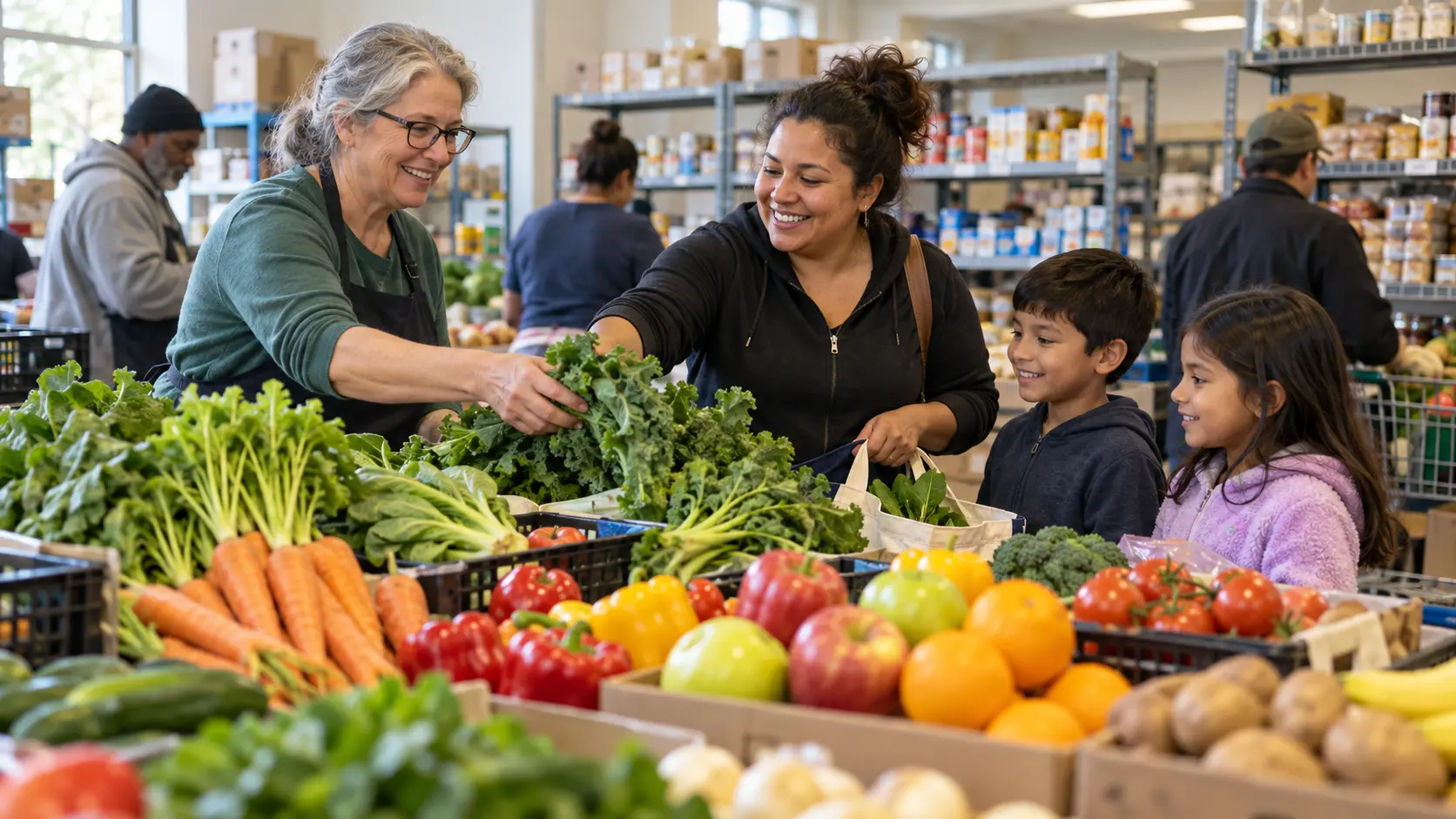
Fresh produce in food pantries gives families access to fruits and vegetables that may be difficult to afford while adding variety, nutrients, and more choices for preparing meals at home. But meaningful food assistance is about more than putting produce in a grocery bag. It also involves choice, appropriate storage, reliable community partnerships, complementary foods, and respect for what families can actually use.
That need remains significant. USDA reported that 13.7% of U.S. households, representing 18.3 million households, experienced food insecurity at some point during 2024. Food insecurity can involve not only having too little food, but also relying on less varied diets and other coping strategies when household resources are limited.
Understanding why fresh produce matters can help families, donors, volunteers, and community organizations think differently about what effective food pantry support should provide.
Why Is Fresh Produce Important in Food Pantries?
Fresh fruits and vegetables can add important nutritional variety to the food families receive.
The CDC notes that fruits and vegetables provide essential vitamins, minerals, fiber, and other nutrients. Current healthy-eating guidance also emphasizes a broader pattern that includes vegetables, fruits, proteins, whole grains, healthy fats, and other nutrient-dense foods.
For a household with a limited grocery budget, however, regularly purchasing a wide range of foods may be difficult. When a pantry can offer fresh produce alongside other groceries, families have more options for building meals instead of relying only on foods chosen primarily because they are inexpensive or easy to store.
Fresh produce may help add fruit to breakfast, vegetables to soups or pasta dishes, ingredients for salads and sandwiches, or side dishes to accompany proteins and grains.
The value is not simply nutritional. It is practical.
A bag of carrots, apples, greens, tomatoes, potatoes, or other available produce can give a family additional ways to use the pantry staples already in their kitchen.
Families Using Food Pantries Often Want Fresh Fruits and Vegetables
One of the most important questions in food assistance is not only what organizations believe people need, but what families themselves say they value.
A statewide study of thousands of food pantry clients in Minnesota found that 85% of clients surveyed in 2019 considered fresh fruits and vegetables important, while only 52% said they were always available. The ability to choose their own foods was the highest-rated priority among clients.
That tells us something important about food pantry support.
People experiencing food insecurity still have preferences. They still plan meals for their families. They may have children who eat certain foods, cultural food traditions, dietary considerations, limited cooking equipment, or specific ingredients they know how to prepare.
Providing food with dignity means recognizing those differences.
Choice Can Make Food Assistance More Useful
Receiving more food does not automatically mean receiving more useful food.
If a household receives items it cannot prepare, does not normally eat, or cannot use before they spoil, part of that assistance may go to waste.
A customer-choice approach gives people more involvement in selecting available foods that make sense for their household.
This is one of the principles behind the MT Hope House Food Pantry Program in DeSoto, Texas. MT Hope House describes its pantry as a customer-choice program designed to recognize differences in household size, food preferences, needs, and circumstances. The pantry serves individuals, families, seniors, veterans, and neighbors experiencing food insecurity or temporary financial hardship.
That approach matters because dignity in food assistance is not only about how someone is treated at the door. It is also about giving people reasonable choices when resources allow.
Fresh Produce Is Important, but Fresh Is Not the Only Healthy Option
An authoritative conversation about food pantry nutrition should avoid one common mistake: assuming that fresh food is always nutritious and canned or frozen food is automatically inferior.
That is not accurate.
CDC guidance recognizes fresh, frozen, canned, and dried fruits and vegetables as useful options. Frozen and canned produce can be just as nutritious as fresh varieties, although people may want to look for options with less added sodium, sugar, or syrup when possible.
For food pantries, this is particularly important.
Fresh produce provides variety and choice, but shelf-stable and frozen foods can last longer, reduce waste, and make it easier for families to keep ingredients available between pantry visits.
A useful pantry offering therefore does not need to choose between fresh produce and shelf-stable food.
It can combine fresh fruits and vegetables with proteins, grains, canned foods, beans, pantry staples, and other practical ingredients that families can turn into complete meals.
MT Hope House follows this broader model. Its pantry may provide fresh produce along with protein items, canned goods, pantry staples, and shelf-stable foods depending on current availability.
Why Can Fresh Produce Be Harder for Food Pantries to Provide?
Fresh food creates challenges that a can of beans or a box of pasta does not.
Produce has a limited shelf life. Some items require refrigeration. Food must move quickly from donors or suppliers to storage and then to families before quality declines.
Research involving food banks has identified limited refrigerated storage, long transportation times, regional differences in produce availability, staffing needs, and distribution infrastructure as barriers to increasing fresh fruit and vegetable distribution.
Research involving food pantries has found similar problems, particularly limited cold-storage space and transportation capacity.
This means donating fresh produce is only one part of the solution.
Organizations also need the ability to receive it, store it safely, organize it, move it efficiently, and distribute it while it is still useful.
That infrastructure is one reason strong partnerships matter so much.
Community Partnerships Help Fresh Food Reach More Families
Food insecurity is larger than any single food pantry.
Fresh food may come through food banks, grocery stores, farms, businesses, nonprofit organizations, community groups, donors, churches, or other partners. Volunteers may help pick up, sort, stock, pack, and distribute that food.
Research on fresh produce distribution through the charitable food network has specifically identified organizational partnerships as an opportunity to improve sourcing and distribution efficiency.
MT Hope House applies this community-based approach through its Community Food Distribution Network.
The network supports churches, nonprofits, ministries, schools, neighborhood programs, and other community organizations through food-distribution partnerships, bulk food allocations, community giveaways, and emergency-response efforts when resources and capacity are available. This allows food support to extend beyond one pantry location and reach people through organizations already serving their communities.
That broader distribution model helps build local food-access infrastructure rather than treating hunger as the responsibility of one organization.
Helping Families Make Better Use of Fresh Produce
Access is only useful when food can actually become part of a household’s meals.
Families receiving produce can often make it last longer by thinking first about which items will spoil fastest. Leafy greens, berries, and some soft produce may need to be used sooner, while foods such as carrots, potatoes, onions, and apples often keep longer when stored properly.
Produce can also become more useful when combined with familiar pantry foods.
Vegetables can be added to rice, beans, pasta, soups, eggs, casseroles, or proteins. Fruit can become part of breakfast, snacks, or simple desserts. Some produce can also be prepared and frozen before it spoils.
Food pantries and community organizations can increase the value of fresh-food distribution by pairing unfamiliar ingredients with simple preparation or storage guidance when practical.
The goal is not to tell families exactly what they should eat. It is to help ensure available food can be used rather than wasted.
Nutritious Food Support Is Also About Dignity
There is an important human side to this conversation.
People do not stop being parents, grandparents, workers, veterans, caregivers, or individuals with preferences simply because they need temporary assistance.
A family may still want ingredients for meals their children recognize. A senior may need foods that are easier to prepare. Another household may prefer foods connected to its cultural traditions.
Research with pantry clients reinforces the importance of listening to these preferences rather than assuming organizations already know what every household wants.
A strong food pantry experience therefore combines availability with respect.
That philosophy is reflected in MT Hope House’s customer-choice model, where food assistance is positioned as practical support delivered in a respectful and welcoming environment rather than a one-size-fits-all handout.
Food Assistance May Be the Beginning of the Conversation
Fresh produce can help improve the quality and variety of food available to a family, but groceries may not address the reason that family is struggling.
Food insecurity can be connected with reduced work hours, unemployment, housing pressure, transportation problems, medical expenses, childcare needs, or several challenges happening together.
This is where MT Hope House’s role extends beyond its pantry.
The organization describes itself as a Community Resource Hub serving DeSoto, neighboring communities, and the greater Dallas area through food assistance, workforce development, education, community partnerships, supportive services, and resource navigation.
Through Community Outreach & Resource Navigation, people can receive guidance in identifying needs and exploring available resources related to areas such as employment, housing referrals, education, veteran services, family support, and other community assistance. MT Hope House does not promise that every referral will result in assistance, but it helps people understand possible options and clearer next steps.
That distinction is important.
Food support can address what a family needs today. Resource navigation may help them begin addressing what is creating pressure for tomorrow.
What Better Food Pantry Support Looks Like
A strong food pantry is not measured only by the number of grocery bags that leave the building.
Quality food support considers whether families have access to nutritious options, whether food choices are useful, whether people are treated with dignity, whether perishable food can be handled responsibly, and whether additional support is available when food insecurity is connected to larger household challenges.
Fresh produce can be an important part of that system.
It offers variety and valuable nutrients. Families often want it. But the greatest impact comes when fresh food is combined with practical staples, customer choice, responsible distribution, community partnerships, and a broader understanding of what families need.
That is the direction MT Hope House is building through its food pantry, Community Food Distribution Network, resource-navigation services, and wider Community Resource Hub in DeSoto.
For someone facing food insecurity, getting the right food at the right time can relieve immediate pressure. For a community, building systems that make useful, nutritious food more accessible can create a stronger foundation for stability.
Frequently Asked Questions
Why is fresh produce important in food pantries?
Fresh produce gives families access to fruits and vegetables that provide fiber, vitamins, minerals, variety, and additional meal options. It can be especially valuable when the cost of fresh groceries makes regular access difficult.
Do food pantries provide fresh fruits and vegetables?
Many do, but availability varies by pantry, season, donations, storage capacity, and food supply. Families should contact their local pantry to ask what foods are currently available.
Is fresh produce healthier than canned or frozen produce?
Not necessarily. Fresh produce is nutritious, but frozen and canned fruits and vegetables can also be nutritious choices. CDC notes that frozen and canned options can be comparable to fresh varieties. Checking for added sodium, sugar, or syrup can help when choices are available.
What is a customer-choice food pantry?
A customer-choice food pantry allows people to select from available foods rather than automatically receiving the same predetermined package. This can help households choose foods that better fit their preferences, family size, dietary considerations, and meal plans.
Why is fresh produce harder for food pantries to distribute?
Fresh produce is perishable and may require refrigeration, quicker transportation, more frequent distribution, additional storage space, and careful inventory management. These infrastructure needs can limit how much produce a pantry can safely handle.
How can families make fresh produce last longer?
Use the most perishable items first, store produce appropriately, plan meals around what is available, and freeze suitable fruits or vegetables before they spoil. Storage needs vary by food, so families should follow safe storage guidance for individual items.
Does MT Hope House provide fresh produce?
MT Hope House’s Food Pantry Program may provide fresh produce along with proteins, canned goods, pantry staples, and shelf-stable foods based on current availability. The pantry uses a customer-choice approach for individuals and families facing food insecurity or temporary financial hardship.
Where can I find food pantry support in DeSoto, Texas?
MT Hope House of Texas provides food pantry assistance in DeSoto and serves surrounding communities. People seeking assistance should contact MT Hope House to confirm current pantry availability, requirements, and scheduling before visiting.