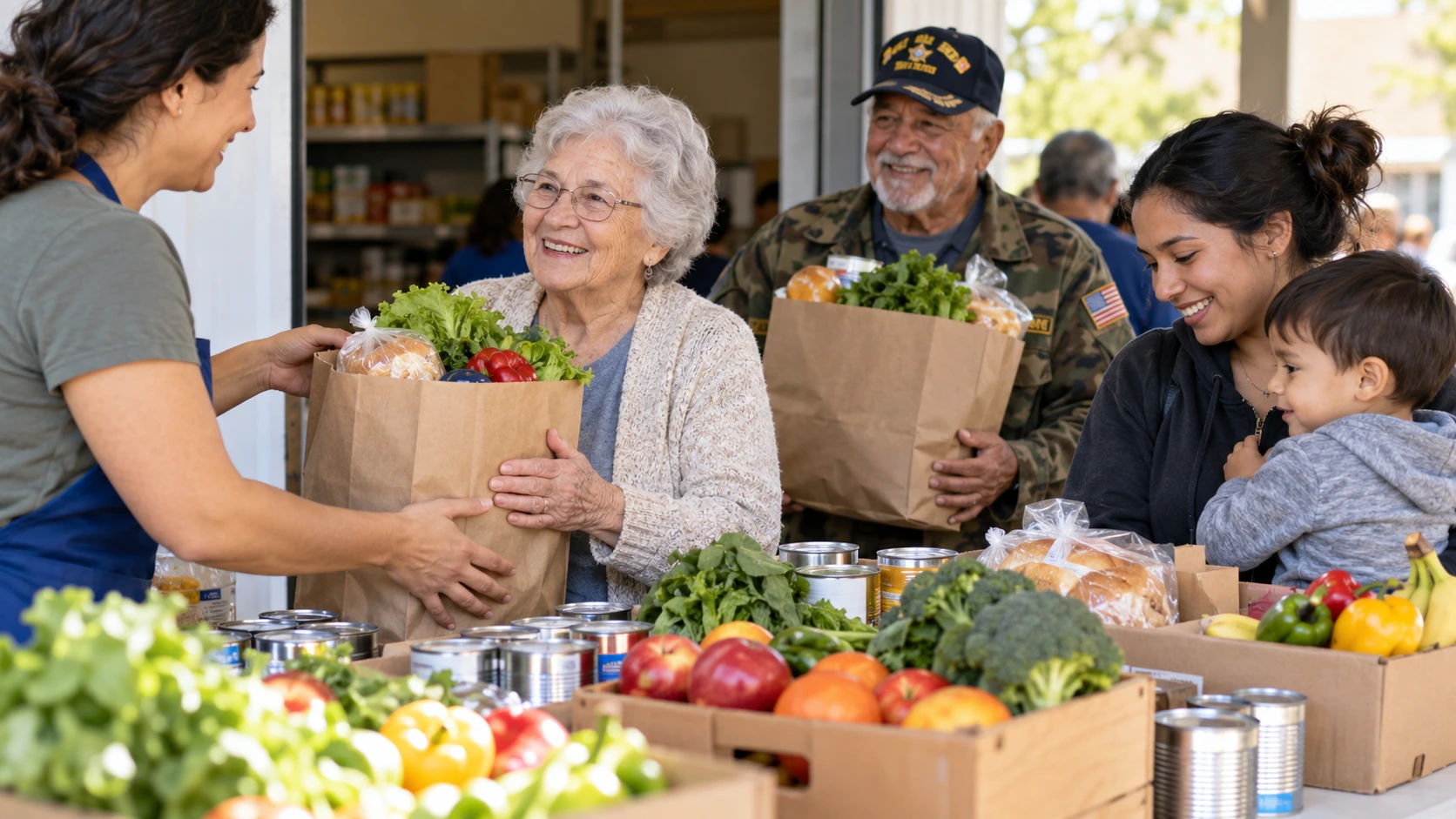
 Food support for seniors, veterans, and families facing hardship is available through local food pantries, SNAP benefits, government nutrition programs, and community organizations. Eligible households can receive free groceries, monthly food benefits, supplemental food packages, or prepared meals based on their income, age, and individual needs.
Seniors can access SNAP, food boxes, and home-delivered meals, while veterans may receive assistance through VA food security resources. Low-income families can benefit from SNAP, WIC, and school meal programs. For those facing immediate food shortages in DeSoto, Texas, We provide community food pantry assistance to families, seniors, veterans, and individuals experiencing financial hardship, helping them access essential groceries during difficult times.
Where Can You Find Free Food and Emergency Assistance?
When groceries run out before your next paycheck or benefit payment, local food pantries and community meal programs are often the fastest places to seek help. Availability depends on your location, distribution schedule, and each organization’s requirements.
Local Food Banks, Food Pantries, and Community Meal Programs
Food banks collect and distribute large quantities of food to partner organizations, while food pantries generally provide groceries directly to households. Community kitchens and meal programs may offer prepared food for people who cannot cook or store groceries.
In DeSoto, Texas, the MT Hope House Food Pantry Program supports individuals and families experiencing food insecurity. First-time visitors should contact the organization to arrange an appointment and confirm food availability.
How to Find Food Assistance Near You
Start with the Feeding America food bank locator, which helps identify food banks serving your ZIP code. You can also call 211 to ask about nearby food pantries, emergency groceries, and community meal services.
Before visiting, confirm operating hours, residency requirements, and whether identification or appointments are needed. If one pantry cannot assist immediately, ask about alternative distribution locations.
Food Assistance Programs for Seniors Living on Fixed Incomes
Older adults who struggle to afford groceries may qualify for government nutrition benefits, supplemental food packages, or prepared meal services. Receiving retirement income does not automatically prevent someone from getting food assistance.
SNAP Benefits and Senior Food Assistance Eligibility
The Supplemental Nutrition Assistance Program (SNAP) helps eligible households purchase groceries using an Electronic Benefits Transfer (EBT) card.
Seniors receiving Social Security may still qualify depending on income, household circumstances, and applicable deductions. Certain medical expenses and housing costs can affect eligibility calculations, so older adults should check their state’s rules before assuming they are ineligible.
Senior Food Boxes and Home-Delivered Meals
The Commodity Supplemental Food Program (CSFP) provides supplemental USDA food packages to eligible adults aged 60 and older. It helps support nutrition but does not replace an entire household’s grocery needs.
Organizations such as Meals on Wheels connect older adults with local meal services, including home delivery where available. These programs can be especially valuable for seniors with disabilities, limited mobility, or difficulty preparing meals.
Food Support Programs for Veterans Facing Financial Hardship
Veterans struggling to afford food can seek assistance through VA healthcare resources, government nutrition programs, and community food organizations. Military service does not automatically qualify someone for every program, but several resources can help identify appropriate support.
VA Food Security Resources and Community Assistance
The VA Food Security Office helps connect veterans with food assistance resources through healthcare teams, social workers, and community partners.
Veterans receiving VA healthcare can tell their primary care team if they frequently run out of groceries. A social worker may help them explore food assistance, benefits, and local referrals.
Veterans facing additional challenges may also benefit from community outreach and resource navigation to identify relevant local services.
Can Veterans Receive SNAP or Other Food Benefits?
Veterans can apply for SNAP if they meet the program’s eligibility requirements. VA disability compensation and other benefits may count as income, depending on the benefit and applicable rules.
Veterans should report their income accurately and ask the state SNAP agency about any exemptions or deductions that apply to their household.
Food Assistance for Low-Income Families and Children
Families struggling with grocery expenses may qualify for SNAP, WIC, school meal programs, and emergency food distribution. Using multiple eligible resources can help households maintain access to nutritious food throughout the month.
SNAP and WIC Programs for Families
SNAP provides grocery purchasing assistance based on eligibility rules, while the Special Supplemental Nutrition Program for Women, Infants, and Children (WIC) supports eligible pregnant and postpartum women, infants, and children under five.
WIC offers specific nutritious foods, nutrition education, and referrals to healthcare services. Because SNAP and WIC serve different purposes, eligible families may receive both.
Free School Meals and Community Food Programs
The National School Lunch Program and School Breakfast Program provide meals to students, with free or reduced-price options depending on eligibility and school participation.
During school breaks, families can explore summer meal programs and local food distributions. Community organizations also help fill gaps when household food supplies are insufficient.
For families facing several financial challenges, understanding support beyond food assistance can help address related needs.
Which Food Assistance Program Fits Your Situation?
The right program depends on whether you need groceries immediately, recurring financial assistance, or meals delivered to your home.
Summarized Comparison Table: Food Support Options by Need
| Program | Who it helps | Assistance provided |
| Food pantries | People experiencing food hardship | Free groceries |
| SNAP | Eligible low-income households | Monthly grocery benefits |
| CSFP | Eligible adults aged 60+ | Supplemental food packages |
| Meals on Wheels | Older adults meeting local service criteria | Prepared meals |
| VA food resources | Veterans experiencing food insecurity | Referrals and support |
| WIC | Eligible women, infants, and young children | Nutrition benefits |
| School meal programs | Students meeting program criteria | School and summer meals |
Families may use more than one program when eligible. For example, a household could receive SNAP benefits while obtaining supplemental groceries from a community food pantry.
How to Get Food Assistance When Transportation or Mobility Is a Barrier
Transportation difficulties, disabilities, and caregiving responsibilities can make accessing free groceries difficult. Some communities offer meal delivery, mobile food pantries, or authorized pickup arrangements to address these barriers.
Home Delivery, Mobile Food Pantries, and Caregiver Support
Mobile food pantries distribute groceries at community locations, reducing the distance some households must travel. Home-delivered meal programs may serve eligible seniors who cannot regularly shop or prepare meals.
Caregivers should ask whether they can collect groceries on someone’s behalf. Requirements vary, and some programs need prior authorization.
Getting Food Support Without Unnecessary Delays
Contact the provider before traveling and explain any mobility limitations, disability-related needs, or transportation difficulties.
For people managing multiple barriers, community resource navigation can help identify appropriate services and referrals.
How to Apply for Food Assistance and Get Help Faster
Start by identifying whether you need food immediately or ongoing financial support. Emergency food providers and government benefit programs operate differently, so contacting both may be appropriate.
Start With Your Immediate Needs and Household Situation
If your household has little food remaining, contact a local pantry rather than waiting for a benefits application to be processed.
Explain your household size, location, and how urgently assistance is needed. Ask whether food is available immediately or through a scheduled appointment.
Check Eligibility and Contact Trusted Assistance Providers
For government benefits, use official state SNAP agencies, WIC offices, or senior nutrition providers.
Applications may request identification, income information, household details, and expenses. Some SNAP applicants experiencing urgent hardship may qualify for expedited processing.
If you live near DeSoto, contact MT Hope House to ask about food pantry appointments and available community support.
Key Takeaways: Finding Reliable Food Support During Hardship
Key Takeaway Bulleted List
- Need food immediately? Contact a nearby food pantry or call 211.
- Living on a fixed income? Explore SNAP, CSFP, and senior meal programs.
- A veteran experiencing hardship? Ask VA healthcare staff about food security resources.
- Supporting children? Check SNAP, WIC, and school meal eligibility.
- Unable to travel? Ask about delivery, mobile distributions, and caregiver pickup.
- Need ongoing assistance? Combine eligible nutrition benefits with local community support.
Frequently Asked Questions
Is it true that seniors can get a food allowance?
Yes, eligible seniors can receive food assistance, but there is no universal government food allowance for everyone over 60. Programs such as SNAP and the Commodity Supplemental Food Program (CSFP) provide grocery benefits or food packages based on eligibility. Some Medicare Advantage plans also offer grocery allowances.
What is Trump doing for veterans’ benefits?
The Trump administration has introduced measures to speed up VA benefits processing and expand access to healthcare. In September 2026, President Trump signed an executive order aimed at improving access to military records and accelerating veterans’ benefit claims.
The VA also reported reductions in its disability claims backlog. These improvements do not mean every veteran automatically receives higher payments or additional benefits.
Can the VA help with groceries?
Yes. The VA can help veterans find grocery assistance, food pantries, and government nutrition benefits. Through its Food Security Office, VA healthcare providers and social workers connect eligible veterans with SNAP, community food banks, and other resources.
What benefits can I receive as a spouse of a veteran with PTSD?
You may qualify for healthcare coverage, caregiver assistance, or financial support, depending on your spouse’s disability rating and circumstances. Eligible spouses may receive CHAMPVA healthcare coverage if the veteran has a permanent and total service-connected disability.
If you provide substantial personal care, you may also qualify for caregiver support, including a monthly stipend under certain conditions. PTSD alone does not automatically qualify a spouse for these benefits.
Can seniors receive SNAP benefits while collecting Social Security?
Yes. Receiving Social Security does not automatically disqualify seniors from SNAP. Eligibility depends on countable income, household circumstances, and applicable deductions, including certain medical and housing expenses.
Can I get free food from a pantry without proof of income?
Yes, some food pantries provide groceries without requiring proof of income. However, requirements vary by organization, and some may ask for identification, residency information, or household details.
Can veterans receive SNAP and VA disability benefits at the same time?
Yes. Veterans may receive SNAP while collecting VA disability compensation if they meet SNAP eligibility requirements. VA disability payments generally count toward household income, which can affect benefit eligibility and amounts.