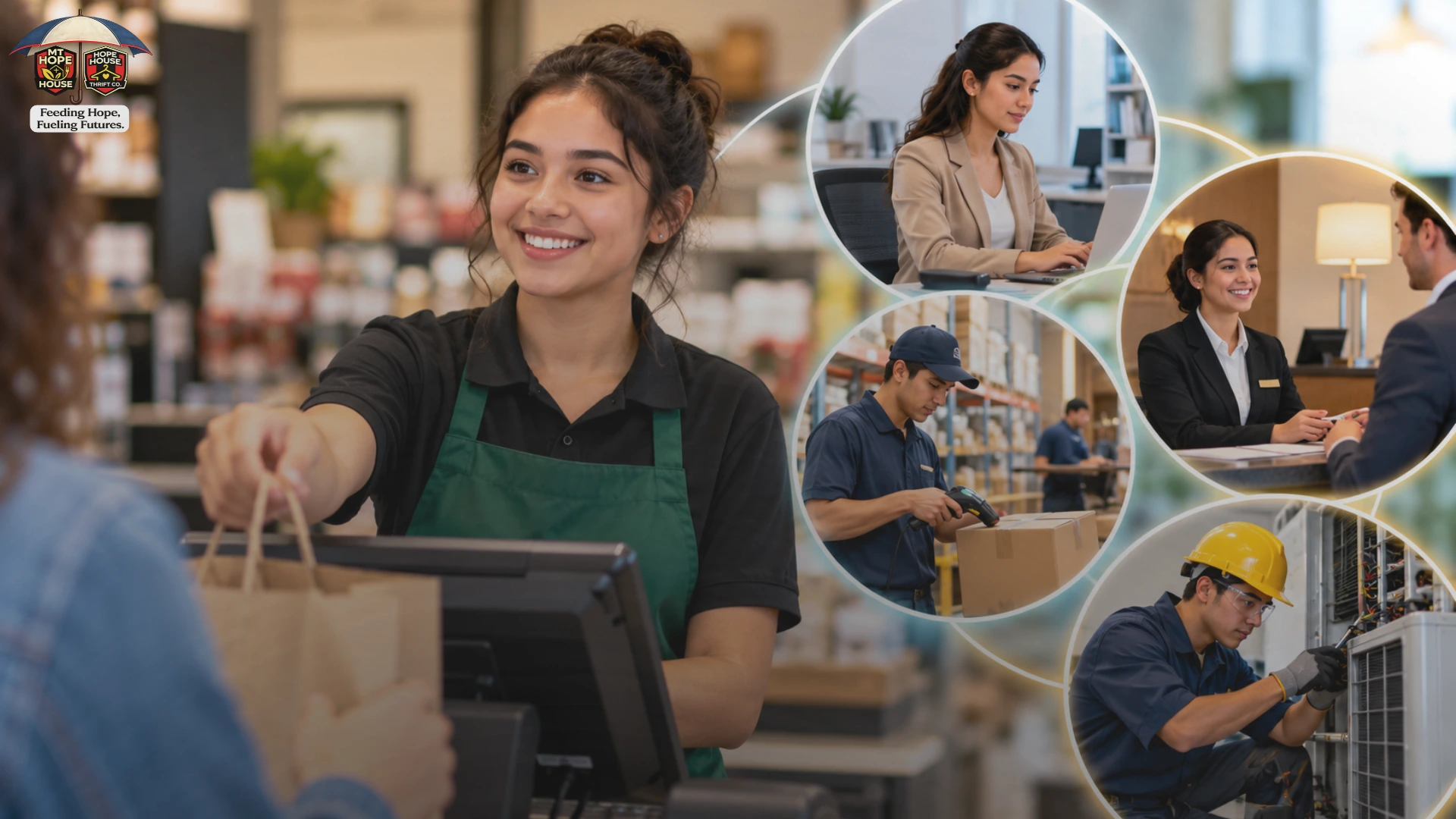
 Retail training builds transferable job skills by developing communication, customer service, problem-solving, teamwork, time management, and digital literacy through hands-on workplace experience. These practical skills prepare individuals for responsibilities beyond retail, including opportunities in hospitality, administration, logistics, sales, and customer support.
For high school graduates, first-time job seekers, and adults considering a career change, retail training provides a foundation for job readiness without necessarily requiring a four-year degree. Combining retail experience with vocational training pathways, technical education, or apprenticeships can help individuals develop specialized skills, explore new career opportunities, and pursue long-term career growth.
How Does Retail Training Build Transferable Job Skills?
Retail training builds transferable job skills by allowing individuals to practice essential workplace responsibilities in real situations. Handling customers, organizing merchandise, processing transactions, and supporting coworkers develop job-ready skills that employers value across industries.
How Everyday Retail Tasks Develop Skills Employers Value
Everyday retail tasks develop skills employers value because they require accuracy, accountability, communication, and independent decision-making.
For example, an employee managing a busy checkout learns to prioritize tasks, maintain transaction accuracy, and communicate under pressure. These practical skills can also support administrative work, reception duties, and service operations.
Why Retail Skills Are Useful Beyond Stores and Sales Jobs
Retail skills are useful beyond stores because many occupations require employees to communicate clearly, solve problems, follow procedures, and work with others.
A retail employee who handles customer complaints may apply those same conflict-resolution abilities in hospitality or office support. The workplace changes, but the underlying competency remains relevant.
What Transferable Skills Can You Learn Through Retail Training?
Retail training develops six major transferable skill areas: communication, problem-solving, teamwork, time management, digital literacy, and sales-related interpersonal abilities. Each supports workplace performance and can strengthen preparation for entry-level jobs.
Communication and Customer Service Skills
Customer service training strengthens active listening, professional communication, patience, and the ability to explain information clearly.
Employees regularly answer questions, understand customer concerns, and communicate solutions. These abilities are valuable in reception, hospitality, client support, and healthcare administration.
Problem-Solving and Conflict Resolution
Retail training develops problem-solving skills by exposing employees to unexpected situations that require practical decisions.
For example, resolving a pricing discrepancy involves checking information, following company policies, and communicating a solution. Similar reasoning supports office administration and operational support.
Teamwork and Workplace Collaboration
Retail employees develop teamwork and collaboration by coordinating responsibilities, supporting coworkers, and completing shared tasks.
Restocking shelves during a busy shift may require employees to divide responsibilities and communicate priorities. These habits are equally relevant in service teams, warehouses, and business operations.
Time Management and Workplace Organization
Retail work strengthens time management through competing deadlines, customer requests, inventory responsibilities, and changing workloads.
An employee balancing checkout duties with merchandise organization learns to prioritize urgent tasks without neglecting accuracy. This experience supports roles requiring scheduling, organization, and consistent productivity.
Digital Literacy and POS Systems
Retail training develops digital literacy through point-of-sale systems, inventory software, payment processing, and electronic records.
These activities introduce employees to workplace technology and data accuracy. Although specialized software requires additional instruction, familiarity with digital systems can make learning new applications easier.
Sales, Adaptability, and Goal-Setting Skills
Retail employees build sales and interpersonal skills by identifying customer needs, explaining products, and responding to changing situations.
Working toward performance goals also teaches progress tracking and adaptability. These abilities can support customer relations, sales coordination, and business development roles.
How Retail Training Skills Transfer to Jobs in Other Industries
Retail training skills transfer to other industries when the underlying workplace competency matches the responsibilities of a different occupation. The strongest career transitions identify what someone learned, how that skill was demonstrated, and where it applies.
The Three-Stage Retail Skills-to-Career Framework
The Retail Skills-to-Career Framework explains skill transfer through three connected stages:
- Retail activity: Completing a real workplace responsibility, such as resolving a customer complaint.
- Transferable competency: Developing communication, judgment, or conflict-resolution abilities.
- Career application: Using that competency in another workplace, such as hospitality or customer support.
This framework helps individuals explain experience through measurable abilities rather than relying only on previous job titles.
Summarized Comparison Table: Retail Activities and Career Applications
| Retail training activity | Transferable competency | Potential career application |
| Customer assistance | Communication | Reception and hospitality |
| Processing payments | Accuracy and digital literacy | Administrative support |
| Inventory tracking | Organization | Warehousing and logistics |
| Resolving complaints | Conflict resolution | Customer support |
| Coordinating shifts | Teamwork | Business operations |
| Meeting sales goals | Performance tracking | Sales coordination |
These connections demonstrate skill relevance, not automatic eligibility for another occupation.
Real-World Examples of Retail Skills Across Industries
Retail experience can support several career pathways when individuals match their abilities with appropriate positions.
For example, someone experienced in inventory management may explore logistics support. A retail associate skilled in customer communication may consider front-desk work, while someone interested in healthcare training could apply those interpersonal abilities after completing the necessary occupational preparation.
How Retail Training Improves Job Readiness Without a Four-Year Degree
Retail training improves job readiness without a four-year degree by developing workplace habits through supervised experience. Individuals learn to follow instructions, communicate professionally, meet expectations, and complete assigned responsibilities.
For high school graduates and adult learners, this experience can provide a practical foundation for employment or further education.
Building Employability Through Hands-On Experience
Hands-on training develops employability by giving learners opportunities to practice tasks and receive feedback.
Unlike studying workplace scenarios alone, retail experience requires employees to respond to real customers, changing priorities, and operational demands. This helps connect learning with daily job performance.
Learning Professionalism and Accountability
Retail training strengthens professionalism by teaching punctuality, responsibility, workplace conduct, and consistency.
Employees learn that completing tasks correctly and communicating delays affects the entire team. These habits support reliable performance in almost any occupation.
Transferable Skills vs. Job-Specific Qualifications
Transferable skills support performance across industries, while industry-specific skills prepare individuals for particular occupational responsibilities.
A retail employee may understand customer communication but still need formal instruction to operate electrical equipment or provide clinical care. Training requirements depend on the occupation, employer, and applicable regulations.
Retail Training vs. Vocational Training: How Do These Career Pathways Compare?
Retail training develops broad workplace competencies, while vocational education prepares learners for specific occupations through structured instruction and practical experience.
Both can support employment, but their purposes differ.
| Factor | Retail training | Vocational training |
| Primary focus | General workplace competencies | Occupation-specific preparation |
| Learning environment | Retail workplace | School, workshop, or workplace |
| Common skills | Service, teamwork, organization | Technical procedures and safety |
| Credentials | Employer training records may apply | Certificates, diplomas, or licenses may apply |
| Career direction | Broad service and support roles | Defined occupational fields |
How On-the-Job Retail Training Develops Workplace Skills
On-the-job training develops workplace skills through supervised responsibilities, demonstrations, practice, and feedback.
An employee learning inventory procedures may improve organization and accuracy while performing actual assignments. This experience provides a foundation for future responsibilities.
How Vocational Schools Build Specialized Career Skills
Trade schools, technical colleges, and community colleges offer different forms of technical training designed around occupational requirements.
Depending on the field, certificate programs and diploma programs may teach equipment operation, safety procedures, and specialized methods. Some programs prepare learners for industry-recognized credentials or professional certifications.
When Retail Experience and Vocational Education Work Together
Retail experience and vocational education work together when general workplace abilities complement specialized occupational knowledge.
For example, someone with strong customer service experience entering HVAC training may already understand client communication but must still learn system diagnostics and safety procedures.
Combining these abilities can strengthen preparation for technical employment.
What Career Opportunities Can Retail Training Help You Explore?
Retail training can help individuals explore employment opportunities in customer support, hospitality, administration, logistics, and business operations.
However, specific positions may require additional education, experience, or credentials.
Customer Support and Hospitality Careers
Customer support and hospitality positions use communication, patience, service recovery, and interpersonal skills developed through retail experience.
Employees familiar with handling customer concerns may adapt those abilities to reservation support, guest services, or customer assistance roles.
Administrative and Office Support Careers
Administrative positions benefit from organization, accurate recordkeeping, scheduling, and professional communication.
Retail employees experienced in transaction processing and daily reporting may already possess foundational abilities relevant to office support.
Inventory, Warehousing, and Logistics Careers
Inventory and logistics roles use stock organization, attention to detail, documentation, and coordination.
Retail workers familiar with merchandise tracking may recognize similar processes in warehouses, although equipment operation and specialized procedures can require additional training.
Sales, Leadership, and Business Operations
Retail experience can support career advancement into sales coordination, supervisory responsibilities, and operational support.
Employees who demonstrate reliability, goal tracking, and effective teamwork may be better prepared to pursue additional responsibilities when suitable opportunities arise.
How to Demonstrate Transferable Retail Skills When Applying for Jobs
Job seekers can demonstrate transferable retail skills by describing specific responsibilities, measurable accomplishments, and examples of successful workplace decisions.
Employers need evidence of performance rather than unsupported claims about personal abilities.
Turning Retail Responsibilities Into Resume Achievements
Strong resumes connect retail responsibilities to outcomes.
For example, instead of writing “Responsible for customers,” a candidate could write:
“Assisted approximately 40 customers per shift, answered product questions, and resolved routine service concerns.”
This hypothetical example demonstrates communication, workload management, and customer support.
Explaining Retail Skills During Interviews
Interview candidates should describe the situation, their actions, and the outcome.
A candidate might explain how they resolved a customer complaint by listening carefully, verifying information, and offering an appropriate solution. This gives employers a practical example of conflict resolution.
Identifying Skill Gaps Before Changing Careers
A successful career change requires comparing existing abilities with the qualifications listed in target job descriptions.
Someone moving from retail into information technology (IT) may possess customer support skills but need technical troubleshooting knowledge. Recognizing this difference helps identify appropriate learning opportunities.
How to Strengthen Retail Skills Through Additional Career Training
Retail skills become more valuable when individuals combine them with training aligned with their occupational goals.
Career training, supervised practice, and continuing education can help learners move beyond general workplace experience toward specialized roles.
Choosing Vocational Programs That Complement Retail Skills
The best vocational training pathways connect existing strengths with a realistic occupational goal.
Individuals who enjoy practical problem-solving might explore skilled trades, including welding, CNC machining, electrical training, or plumbing. These options can lead toward construction careers or manufacturing careers, depending on the qualification and role.
Before enrolling, applicants should compare program duration, tuition and financial aid, eligibility, and employer expectations.
MT Hope House of Texas helps eligible individuals explore skilled trades and vocational training pathways through career guidance, training referrals, and enrollment support.
Exploring Apprenticeships and Practical Learning
Apprenticeships combine structured learning with supervised work experience, often providing a route into occupations requiring specialized abilities.
Some learners may also benefit from healthcare training, employer-sponsored instruction, or other occupational programs.
The right option depends on available providers, career goals, and required qualifications.
Building a Practical Career Development Plan
A practical development plan begins with identifying current skills, selecting an occupation, and researching suitable learning options.
Individuals can then compare training providers, explore job placement support, and establish achievable milestones.
Organizations such as MT Hope House of Texas connect community members with educational resources and employment support. Its workforce development program also provides career coaching, employment preparation, and possible employer connections.
Key Takeaways: How Retail Training Supports Long-Term Career Growth
Retail training supports long-term career growth by helping individuals develop transferable competencies that remain useful across different workplaces.
Key takeaways include:
- Communication and customer service can support careers beyond retail.
- Problem-solving, teamwork, and time management strengthen everyday workplace performance.
- Digital literacy and organizational abilities can support administrative and operational roles.
- Hands-on training helps individuals demonstrate practical experience.
- Vocational training pathways can add specialized occupational knowledge.
- Career planning helps connect existing strengths with realistic employment goals.
For young people exploring their futures, youth development programs can also provide opportunities for career awareness, responsibility, and workplace preparation.
Frequently Asked Questions About Retail Training and Transferable Job Skills
What Are the Most Valuable Transferable Skills Learned in Retail?
The most valuable transferable skills learned in retail include communication, customer service, problem-solving, teamwork, time management, adaptability, and digital literacy. Retail employees develop these abilities by assisting customers, handling transactions, organizing inventory, and coordinating daily tasks. These skills are useful in other industries because employers often need workers who can communicate clearly, manage responsibilities, and solve everyday workplace problems.
How Does Retail Experience Prepare Someone for a Different Career?
Retail experience prepares someone for a different career by providing practical experience with responsibilities common to many workplaces.
For example, handling customer complaints develops conflict-resolution skills useful in hospitality, while managing inventory builds organizational skills relevant to warehousing and logistics. Individuals can use these transferable abilities when applying for positions in other industries, although some jobs require additional qualifications.
Can Retail Training Help Someone Get a Job Without a College Degree?
Yes, retail training can help someone get a job without a college degree, particularly in entry-level customer service, sales, hospitality, and administrative support positions.
Employers may value practical experience, communication skills, reliability, and the ability to complete workplace tasks. However, some positions require specific certifications, technical training, or previous experience, even when a four-year degree is unnecessary.
Is Customer Service a Transferable Job Skill?
Yes, customer service is a transferable job skill because it develops communication, active listening, patience, problem-solving, and conflict-resolution abilities.
These competencies are useful in retail, hospitality, healthcare administration, reception, and customer support. For example, someone experienced in resolving retail customer complaints may apply similar communication techniques when assisting hotel guests or responding to client concerns.
What Industries Value Skills Developed Through Retail Training?
Industries that value skills developed through retail training include hospitality, healthcare administration, logistics, customer support, sales, and business services.
Hospitality employers value customer interaction skills, logistics companies benefit from inventory organization, and administrative employers may value accurate recordkeeping and communication. The most relevant industry depends on the individual’s experience and the specific requirements of the position.
How Can Retail Training Skills Be Included on a Resume?
Retail training skills can be included on a resume by describing specific workplace responsibilities, relevant competencies, and measurable achievements.
Instead of simply listing “good communication skills,” a candidate could write, “Assisted 40 customers per shift, answered product questions, and resolved routine service concerns,” if those figures reflect actual experience. This approach helps employers understand how the candidate has demonstrated transferable skills in a professional setting.
Can Retail Experience Help Someone Succeed in Vocational or Technical Training?
Yes, retail experience can help someone succeed in vocational or technical training by developing time management, teamwork, communication, accountability, and problem-solving skills.
These abilities can help learners follow instructions, collaborate during practical exercises, and manage training responsibilities. However, retail experience does not replace the specialized knowledge, safety instruction, or hands-on technical training required for occupations such as welding, HVAC, electrical work, or healthcare.