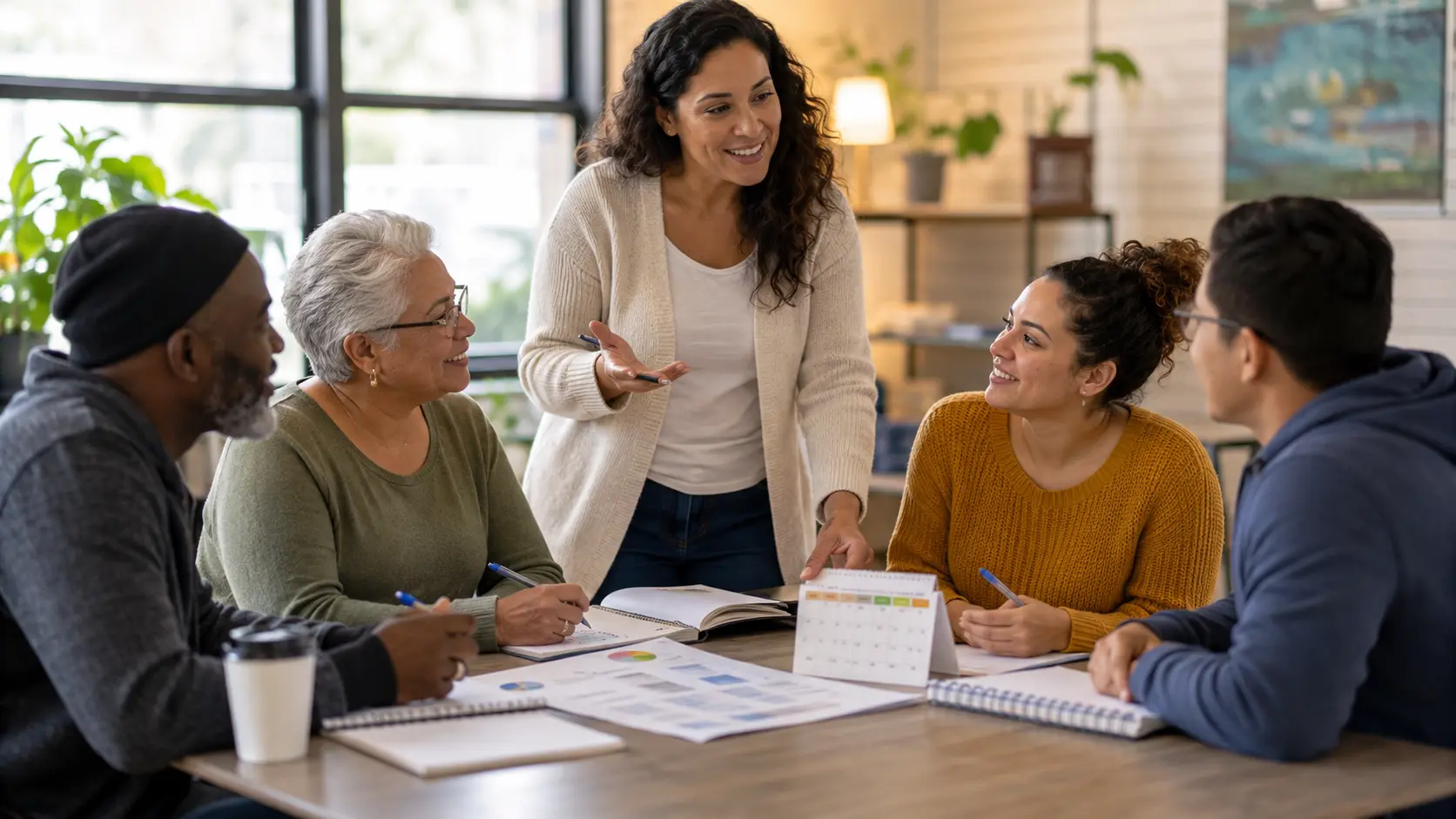
Independence is rarely built through one big decision. More often, it develops through dozens of everyday skills that help a person manage responsibilities, communicate clearly, solve problems, handle money, keep commitments, and respond when life does not go as planned.
For adults dealing with unemployment, financial pressure, family responsibilities, major transitions, or a difficult season, those everyday tasks can become harder to manage.
Life skills training for adults helps strengthen the practical, social, and decision-making abilities people use to manage daily life, work toward goals, and become more independent.
These skills cannot remove every barrier a person may face. They cannot replace housing, employment, food assistance, healthcare, or professional mental health services when those supports are needed. But practical life skills can make it easier to use available resources, make informed decisions, follow through on responsibilities, and move forward with greater confidence.
At MT Hope House of Texas, life skills development is part of a broader approach that connects practical learning with wellness support, workforce development, food assistance, education, and community resource navigation.
What Is Life Skills Training for Adults?
Life skills training teaches practical abilities that help adults manage everyday responsibilities and respond constructively to challenges.
The World Health Organization identifies core life skills such as decision-making, problem-solving, critical thinking, communication, interpersonal relationships, self-awareness, and managing stress and emotions.
For adults, life skills may also include:
- Planning and organization
- Time management
- Financial awareness
- Communication
- Problem-solving
- Goal setting
- Personal responsibility
- Stress management
- Teamwork
- Adaptability
- Workplace behavior
- Navigating community resources
These skills overlap because real life does not separate problems into neat categories.
For example, getting to a job interview on time may require planning transportation, managing time, communicating professionally, preparing clothing, controlling stress, and solving an unexpected problem along the way.
That is why effective life skills training focuses on practical application rather than memorizing information.
Why Are Life Skills Important for Adults?
Life skills matter because adults regularly make decisions that affect employment, finances, relationships, health, and household stability.
A missed appointment may delay an important service. Poor communication can create conflict at work. Lack of planning can make transportation or childcare problems harder to manage. Difficulty organizing bills can increase financial stress.
Strong life skills do not guarantee that every situation will go smoothly, but they give people more tools for responding when challenges arise.
The U.S. Department of Labor also identifies communication, teamwork, professionalism, critical thinking, and problem-solving as important workplace skills.
These abilities are useful well beyond employment. They support everyday independence.
7 Ways Life Skills Training Can Support Greater Independence
1. Planning and Time Management Help Create More Reliable Routines
Planning is one of the most practical life skills an adult can strengthen.
A person may need to coordinate work, school, childcare, medical appointments, transportation, household responsibilities, and personal goals within the same week.
Simple tools such as calendars, reminders, written schedules, checklists, and advance planning can reduce avoidable disruption.
For example:
Plan transportation → leave enough time → arrive on schedule → keep the commitment → build reliability
The tool itself is simple. The repeated behavior creates the value.
2. Problem-Solving Helps People Respond Instead of Feeling Stuck
Everyday problems rarely come with perfect solutions.
A bus may be late. A childcare arrangement may fall through. A bill may be higher than expected. A job application may be rejected.
Problem-solving skills help people slow the situation down and ask:
What is the actual problem?
What options are available?
What can I control?
What needs attention first?
Who might be able to help?
What happens if my first option does not work?
WHO includes decision-making and problem-solving among core life skills because they help people respond more constructively to real-life challenges.
3. Communication Skills Support Work, Family, and Daily Life
Communication is not simply about speaking confidently.
It also involves listening, asking clear questions, understanding instructions, expressing concerns appropriately, and knowing when to clarify something before acting.
These skills matter when speaking with employers, teachers, landlords, service providers, family members, healthcare professionals, or community organizations.
The Department of Labor highlights both communication and attentive listening as important workplace abilities.
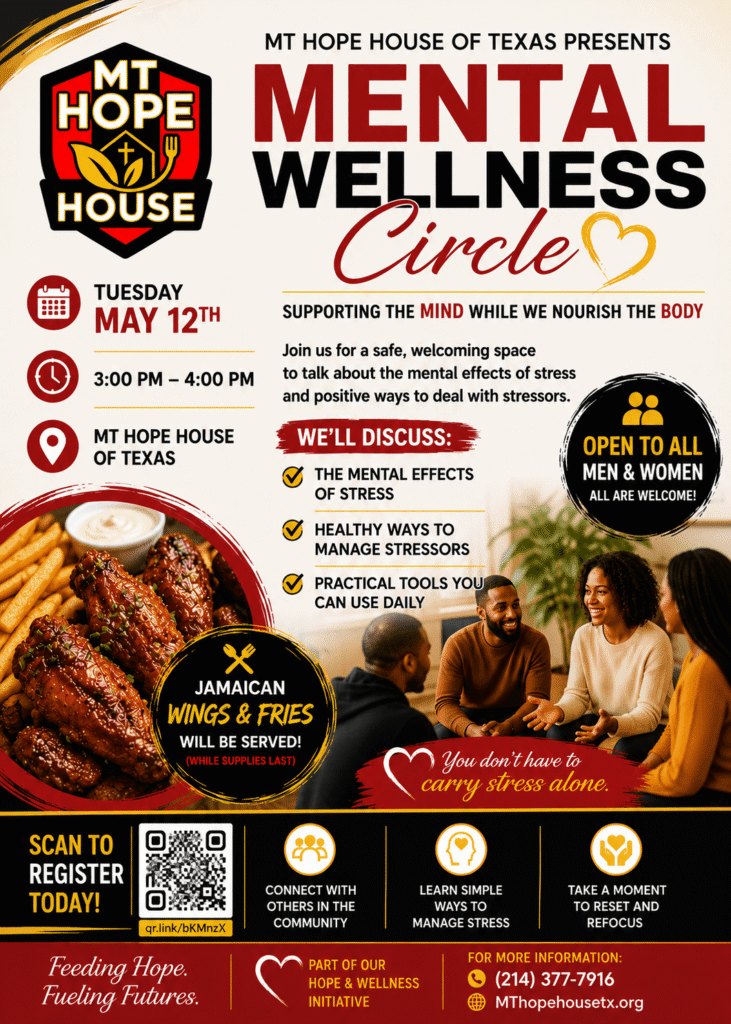
MT Hope House also includes communication as a topic within life skills workshops offered through its Hope & Wellness Initiative.
4. Financial Life Skills Help Adults Make More Intentional Decisions
Financial literacy is broader than creating a budget.
Useful financial life skills may include:
- Tracking income and expenses
- Distinguishing needs from wants
- Planning for regular bills
- Understanding financial tradeoffs
- Setting short-term savings goals
- Preparing for irregular expenses
- Asking questions before signing financial agreements
Financial education cannot create income where none exists, and budgeting alone cannot solve the problem of insufficient wages.
But stronger financial decision-making can help people use the resources they have more intentionally.
Research on a financial life-skills program involving economically vulnerable young people found improvements in self-efficacy and financial behaviors over time, although those findings came from a specific program and population and should not be applied universally.
5. Workplace Life Skills Can Improve Employment Readiness
Technical qualifications may help someone get considered for a job, but everyday workplace behavior often affects whether that person succeeds after being hired.
Useful workplace life skills include:
- Showing up reliably
- Following instructions
- Communicating with supervisors
- Working with others
- Accepting feedback
- Managing time
- Solving routine problems
- Acting professionally
The Department of Labor specifically identifies communication, teamwork, problem-solving, critical thinking, professionalism, and work ethic as important elements of workplace readiness.
Adults whose main challenge is employment may also benefit from workforce-specific support. MT Hope House provides workforce development and job-readiness resources that complement, rather than replace, general life skills development. Readers can also explore the organization’s guide on Why Workforce Development Matters for Long-Term Stability.
6. Stress-Management Skills Can Make Difficult Situations Easier to Navigate
Stress can affect concentration, communication, sleep, decision-making, and motivation.
Life skills training should not suggest that someone can simply stay positive and make financial hardship, unemployment, housing problems, or family pressure disappear.
Instead, stress-management education can teach people to recognize pressure earlier and respond more intentionally.
That may involve:
- Identifying personal stress signals
- Pausing before reacting
- Breaking a large problem into smaller tasks
- Maintaining supportive relationships
- Creating healthier routines
- Recognizing when professional help is needed
- Asking for support before a problem becomes overwhelming
WHO includes managing stress and emotions within established life-skills frameworks.
MT Hope House’s Hope & Wellness Initiative provides nonclinical support involving stress management, life skills, peer connection, personal development, confidence, and healthier support systems. It is not a replacement for licensed therapy or medical care.
7. Goal-Setting Helps Turn Good Intentions Into Specific Actions
Goals such as “get a better job,” “save money,” or “be more organized” can feel too broad to act on.
Life skills training can help turn those ideas into smaller steps.
For example:
Goal: Find employment
Next steps: Update resume → identify three suitable jobs → submit applications → prepare interview examples → arrange transportation
A useful goal should answer:
What am I trying to accomplish?
What is the next realistic step?
When will I do it?
What could get in the way?
Who or what can help?
This type of planning makes progress easier to track.
What Does Research Say About Life Skills Training?
Life skills education has been studied across many different populations and settings.
The evidence is not identical across every program, which is important to acknowledge.
A 2026 randomized controlled trial of UNICEF’s Basic Life Skills Program involving late adolescents and emerging adults found improvements in measures related to self-awareness. The study was conducted in Pakistan and focused on a specific age group, so it should not be treated as proof that every adult life skills program produces the same results.
Research across other populations has also found that structured life skills programs commonly combine learning with practical exercises and real-world application. A recent review of adult life-skills programs in clinical settings found that structured teaching, diverse learning methods, and practice were common features, although that evidence applies to a specific population.
The broader lesson is useful:
Life skills are most likely to become useful when people have opportunities to learn, practice, apply, reflect, and repeat them.
That principle also appears in UNICEF’s life-skills guidance, which emphasizes learning through doing and practicing rather than relying only on lectures.
What Happens in a Life Skills Workshop?
A useful workshop should do more than tell participants what they “should” do.
Activities may include:
- Group discussions
- Real-life scenarios
- Planning exercises
- Role play
- Goal-setting activities
- Communication practice
- Problem-solving exercises
- Reflection
- Worksheets or simple planning tools
The goal is practical application.
For example, instead of giving a lecture about organization, a participant might create a weekly schedule.
Instead of only discussing communication, participants may practice how to ask a supervisor for clarification.
Instead of simply defining problem-solving, the group may work through a realistic transportation, budgeting, or workplace scenario.
MT Hope House’s Life Skills Workshops may cover communication, planning, decision-making, responsibility, problem-solving, personal organization, and healthy routines through its Hope & Wellness Initiative.
Life Skills Training Is Not the Same as Therapy or Job Training
These services can overlap, but they are not interchangeable.
Life skills training focuses on practical abilities used in daily life.
Job training focuses more directly on employment preparation, workplace skills, or occupation-specific abilities.
Therapy or clinical mental health treatment addresses mental health conditions through qualified professionals.
A person may need one, two, or all three at different points.
MT Hope House makes this distinction clearly. Its Hope & Wellness Initiative is a community-based, nonclinical program. When someone requires clinical mental health care or another specialized service, the organization may help connect them with appropriate resources through its Community Outreach & Resource Navigation program.
Life Skills Work Best When Other Barriers Are Addressed Too
Sometimes the problem is not a lack of skills.
Someone may know how to budget but still not earn enough income.
A person may understand punctuality but lack reliable transportation.
Someone may be prepared for work but have no childcare.
A family may be organized but still face food insecurity or housing instability.
That is why life skills training should be part of a broader support system when other barriers exist.
MT Hope House operates as a Community Resource Hub in DeSoto, Texas, connecting food assistance, workforce development, vocational pathways, wellness programming, education, and resource navigation.
Its Community Outreach & Resource Navigation program helps individuals and families identify needs, understand possible resources, and connect with appropriate community organizations when available.
How Can Adults Practice Life Skills Every Day?
Life skills improve through use.
Start small.
Choose one area that is creating unnecessary difficulty and practice one behavior consistently.
For planning, use one calendar for every appointment.
For money management, review spending once a week.
For communication, practice asking questions when instructions are unclear.
For problem-solving, write down three possible responses before reacting.
For goal-setting, choose one realistic action to complete this week.
For stress management, identify one healthy strategy you can use before pressure becomes overwhelming.
The goal is not perfection.
It is to make everyday responsibilities slightly easier to manage, then build from there.
Building Independence One Skill at a Time
Life skills training for adults is not about teaching people how to live their lives.
It is about giving people practical tools they can adapt to their own responsibilities, goals, strengths, and circumstances.
Planning can make commitments easier to keep. Communication can prevent misunderstandings. Problem-solving can create options when something goes wrong. Financial awareness can support more intentional decisions. Goal-setting can turn a long-term idea into a realistic next step.
At MT Hope House, these skills are part of a broader effort to help individuals and families move from immediate challenges toward greater confidence, stability, and independence.
Adults in DeSoto and surrounding communities who want practical life skills, wellness support, or personal-development resources can learn more through MT Hope House’s Hope & Wellness Initiative.
Frequently Asked Questions
What are the most important life skills for adults?
Important life skills include communication, planning, organization, time management, decision-making, problem-solving, financial awareness, stress management, teamwork, adaptability, and goal-setting. The most useful skills depend on the individual’s responsibilities and circumstances.
What is life skills training for adults?
Life skills training helps adults strengthen practical abilities used in everyday life, including planning, communication, decision-making, financial management, problem-solving, organization, and managing responsibilities.
What are the benefits of life skills training?
Life skills training can help people become more organized, communicate more effectively, make clearer decisions, solve everyday problems, manage responsibilities, prepare for employment, and work toward greater independence.
Are life skills the same as soft skills?
Not exactly. Soft skills generally describe interpersonal and workplace abilities such as communication, teamwork, and professionalism. Life skills are broader and may also include budgeting, organization, daily planning, personal responsibility, stress management, and navigating resources.
Can life skills training help with employment?
Yes. Skills such as communication, teamwork, reliability, time management, problem-solving, and professionalism are relevant to employment. Adults who need more direct career assistance may also benefit from job-readiness or workforce-development programs.
Can adults improve their life skills?
Yes. Life skills can be practiced and strengthened over time. Workshops, structured exercises, real-world practice, feedback, goal-setting, and repeated use can all help people develop practical skills.
Is life skills training a form of therapy?
No. Life skills education focuses on practical abilities and personal development. It does not replace licensed mental health treatment, diagnosis, or clinical counseling.
Where can adults find life skills support in DeSoto, Texas?
MT Hope House of Texas offers life skills and personal-development support through its Hope & Wellness Initiative in DeSoto. The organization also connects community members with workforce, food, education, wellness, and resource-navigation services based on their needs.
One Response