 Finding veteran resources and community support starts with identifying immediate needs and contacting trusted organizations that provide practical assistance. Veterans can access housing programs, healthcare, employment training, financial relief, and family services through federal agencies, nonprofit organizations, and local support networks.
The U.S. Department of Veterans Affairs (VA), accredited service representatives, and community providers can help veterans identify suitable programs. A four-step approach involving assessment, connection, application, and follow-up makes finding assistance more manageable.
Where Can Veterans Find Community Resources and Support Services?
Veterans can find veteran support services through federal agencies, state departments, county offices, and nonprofit organizations. The most appropriate starting point depends on whether they need immediate assistance, government benefits, or ongoing community support.
What Types of Assistance Are Available to Veterans and Their Families?
Available veterans assistance programs cover housing, medical treatment, employment, education, counseling, and financial hardship. Some provide basic needs assistance, while others focus on disability benefits, professional development, or independent living.
Program availability and eligibility vary, making individual needs the starting point for selecting assistance.
Which Organizations Should Veterans Contact First for Help?
The U.S. Department of Veterans Affairs (VA) handles federal services, while County Veterans Service Officers (CVSO) and accredited representatives provide benefits guidance. Veteran assistance organizations can also connect individuals with nearby services.
Veterans facing immediate homelessness can call 877-424-3838 for free assistance through the VA’s National Call Center for Homeless Veterans.
How Can Veterans Find Reliable Support Services in Their Local Community?
Veterans can locate local veteran services through state agencies, county offices, and established nonprofit providers. The National Resource Directory and 211 community services can help identify additional community assistance options.
Local veteran resource centers may offer direct guidance, making it easier to connect with appropriate services.
How to Find the Right Veteran Support Using a Four-Step Navigation Pathway
Effective community support for veterans follows four practical steps: identify needs, find qualified providers, complete applications, and maintain ongoing assistance. This approach prevents individuals from spending valuable time contacting programs unrelated to their circumstances.
Step 1: Identify Immediate Housing, Healthcare, Financial, or Employment Needs
Veterans should prioritize urgent problems before longer-term goals. Housing instability, medical concerns, and insufficient food require immediate attention, while employment planning may continue alongside essential support.
For example, a veteran facing eviction and unemployment may need housing assistance before beginning intensive career training.
Step 2: Connect With VA Programs, Veteran Service Organizations, and Community Providers
Appropriate connections depend on the assistance required. Federal offices manage benefit decisions, while local nonprofit organizations often coordinate practical services and resource referrals.
Resource navigation helps individuals avoid unnecessary applications by directing each need to the appropriate provider.
Step 3: Check Eligibility, Prepare Documents, and Apply for Assistance
Veterans should verify program rules and gather relevant records before submitting applications. Reviewing veteran eligibility requirements early helps identify potential complications and prevents avoidable delays.
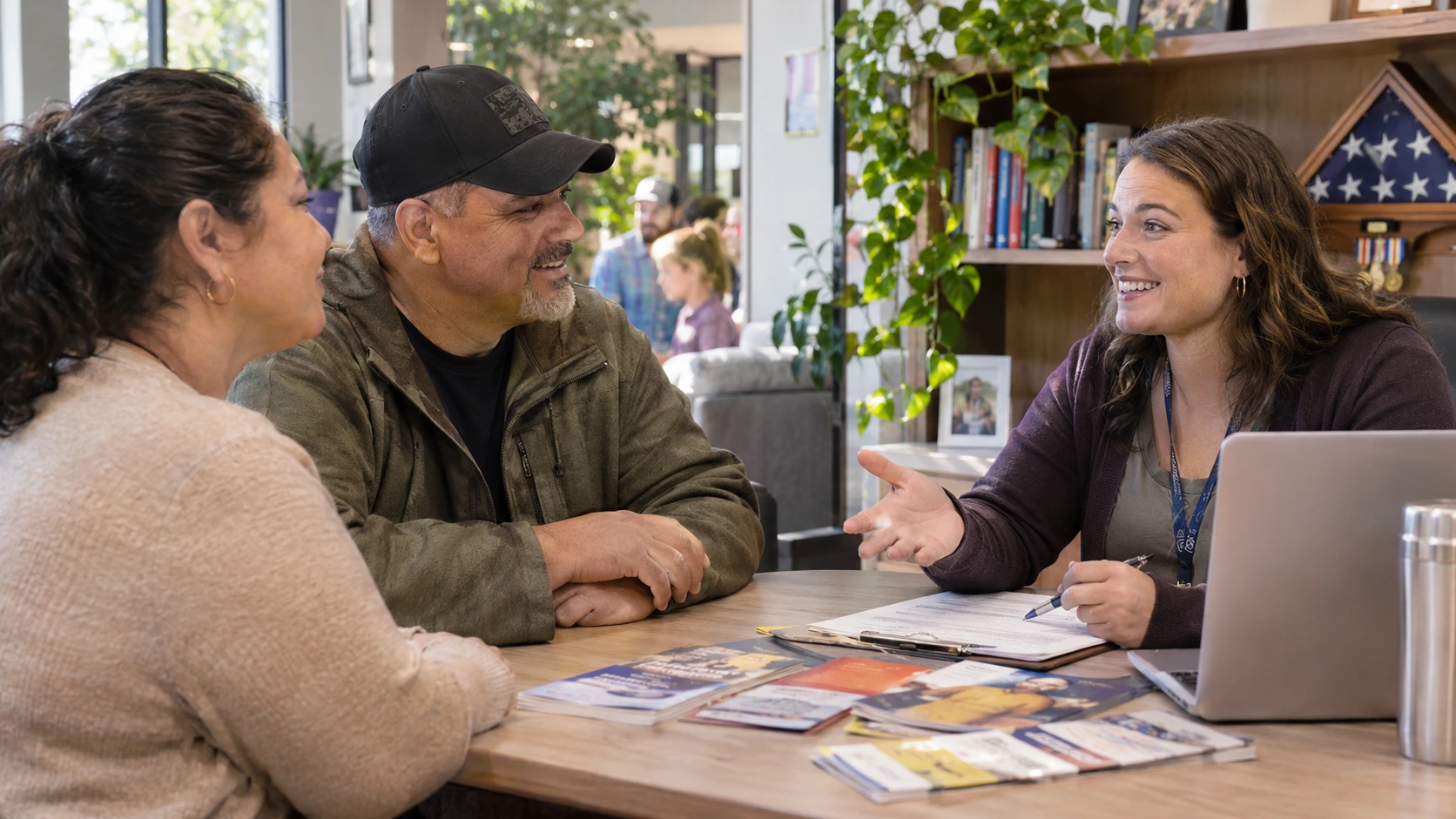
Representatives can explain the benefits application process and assist with unfamiliar paperwork.
Step 4: Coordinate Ongoing Services for Long-Term Stability
Continued coordination helps veterans maintain progress after receiving initial assistance. Providers may develop individual support plans connecting housing, healthcare, and employment services.
This long-term support encourages consistent progress toward greater security and independence.
What Housing and Financial Assistance Programs Are Available for Veterans?
Veteran housing assistance includes emergency shelter referrals, housing placement, rental support, and services intended to prevent homelessness. Financial support may also be available through approved federal programs, local agencies, and charitable organizations.
Emergency Housing Assistance and Homelessness Prevention for Veterans
Veterans experiencing housing emergencies can request emergency housing support through VA homelessness services or local shelters. Available homeless veterans assistance may include shelter referrals, housing assessments, and case coordination.
Transitional housing can provide temporary accommodation while individuals work toward permanent housing.
Supportive Services for Veteran Families (SSVF) and VA Housing Programs
Supportive Services for Veteran Families (SSVF) helps eligible households maintain or obtain stable housing. Depending on eligibility and local availability, services may include temporary financial help and housing-related case management.
The HUD-VASH program combines housing vouchers with supportive services for eligible veterans experiencing homelessness. These options provide different forms of rental assistance for veterans. VA Homeless Programs
Financial Assistance, Food Support, and Emergency Relief Resources
Veterans facing unexpected expenses can contact community agencies offering financial assistance programs. Available support may include emergency financial assistance, utility bill assistance, and food assistance programs.
Local providers assess household circumstances and available funding before determining which services can help restore financial stability.
How Can Veterans Access Healthcare and Mental Health Support?
Veterans can seek medical and psychological assistance through VA facilities, community providers, and specialized treatment programs. Access depends on eligibility, clinical needs, and available services.
VA Healthcare Enrollment and Medical Services
The Veterans Health Administration (VHA) delivers veteran healthcare services through hospitals, outpatient clinics, and VA medical centers. Eligible veterans can receive primary care, specialty treatment, and rehabilitation services.
Applicants should review VA enrollment requirements before selecting an appropriate facility.
Veteran Mental Health Counseling and Community-Based Support
Mental health support for veterans includes therapy, counseling services, substance use treatment, and other behavioral health services.
The National Center for PTSD provides educational information about post-traumatic stress disorder (PTSD) and treatment options. Veterans seeking PTSD support can also ask healthcare professionals about specialized care.
For urgent emotional distress, the Veterans Crisis Line is available by calling 988 and pressing 1, or texting 838255. Immediate danger requires emergency services.
Healthcare Resources for Veteran Families and Caregivers
Families can seek caregiver education, care coordination, and eligible health-related assistance through VA and community providers. Military family resources may help caregivers understand available treatment pathways and support options.
These services complement medical treatment by addressing the practical responsibilities families manage every day.
What Employment and Career Support Is Available for Veterans?
Veteran employment services help former service members identify suitable careers, prepare applications, obtain training, and pursue job opportunities. Employment centers and specialized programs can help translate military experience into qualifications employers recognize.
Veteran Employment Assistance and Job Placement Programs
The U.S. Department of Labor supports employment initiatives through American Job Centers. Available assistance includes veteran job placement programs, resume assistance, and career counseling.
These services help veterans understand hiring requirements and identify positions matching their experience.
Veteran Readiness and Employment (VR&E) Services
VA’s Veteran Readiness and Employment program provides eligible veterans with employment-related assistance when service-connected disabilities create work barriers.
Services may include vocational rehabilitation, employment planning, and job training programs, depending on individual eligibility and needs.
Career Training, Education Benefits, and Civilian Workforce Transition
Veteran education benefits, including eligible GI Bill benefits, can help former service members pursue education or approved training.
Apprenticeship opportunities and veteran career development programs support skills transition into the civilian workforce. Choosing training aligned with actual job requirements improves the usefulness of this investment.
How Do Veteran Service Organizations and Community Support Programs Help?
Community organizations provide benefits guidance, practical referrals, peer connections, and assistance accessing programs. These resources for former service members complement government services and can reduce the burden of navigating multiple agencies.
Veteran Service Organizations (VSOs) and Benefits Assistance
Veteran service organizations (VSOs) help individuals understand claims, eligibility, and available assistance. Organizations such as the American Legion, Veterans of Foreign Wars (VFW), and Disabled American Veterans (DAV) offer various forms of support.
VA-accredited representatives from recognized organizations provide free assistance with benefits claims.
Local Nonprofit Organizations and Community Resource Navigation
Organizations such as Volunteers of America, faith-based organizations, and other community providers may offer housing, employment, and essential assistance.
Veteran outreach programs and community outreach programs can connect underserved individuals with accessible community services through established community partnerships.
Veteran Case Management, Referrals, and Coordinated Support
Case management services help coordinate assistance when veterans face multiple challenges. Case managers can arrange assessments, connect providers, and monitor service access.
This coordinated approach offers personalized assistance rather than requiring veterans to manage every agency independently.
Peer Support Networks and Community Reintegration Programs
Veteran peer networks provide opportunities to connect with others who understand military experiences. Peer support groups may offer encouragement, shared experiences, and connections to professional services.
These relationships can support reintegration into society and reduce isolation during major life changes.
What Support Resources Are Available for Veteran Families and Caregivers?
Support for veterans and families includes caregiving guidance, family assistance, emotional support, and referrals to community programs. Available services depend on household circumstances, eligibility, and the veteran’s care needs.
Family Assistance Programs and Community-Based Services
Family support programs may connect households with childcare referrals, counseling, food support, and additional social services.
Such community-based assistance can strengthen family stability when military transitions or financial difficulties affect the household.
VA Caregiver Support Programs and Respite Care Resources
VA caregiver programs offer information, training, support, and certain services to eligible caregivers. Some qualifying caregivers may access respite care or additional program-specific benefits.
Caregivers should contact VA’s Caregiver Support Program to understand current eligibility and available assistance.
How Families Can Help Veterans Navigate Benefits and Support Services
Families can help organize documents, identify urgent needs, arrange appointments, and maintain communication with providers.
With the veteran’s consent, caregivers can assist with applications and follow-up assistance, making complex service arrangements easier to manage.
How Can Veterans Determine Eligibility and Apply for Support Programs?
Veterans should check service history requirements, financial criteria, household circumstances, and program-specific rules before applying. An accredited representative can help determine which pathways remain available.
Common Eligibility Requirements for VA Benefits and Community Assistance
Eligibility depends on the specific program, qualifying service, and sometimes military discharge status. An honorable discharge may satisfy certain requirements, but some programs recognize other discharge circumstances.
The Veterans Benefits Administration (VBA) can provide information about federal benefit eligibility.
Documents Veterans May Need When Requesting Support
Common required documentation includes a DD214 form, identity records, household information, and relevant financial or medical documents.
Some providers request additional veteran identification or evidence of eligibility. Applicants should confirm requirements before submitting sensitive information.
What to Do When a Veteran Does Not Qualify for a Specific Program
Veterans denied one service can seek guidance from VA regional offices, a State Veterans Affairs Office, or local veteran assistance offices.
A County Veterans Service Officer (CVSO) may identify alternative social services, explain review options, and connect applicants with other programs.
Veteran Resources and Community Support Programs: Summarized Comparison Table
Different programs address different needs, so comparing their purpose and access points makes choosing assistance easier. Veteran community resources should be evaluated by service type, eligibility, and the organization responsible for providing help.
Comparing Veteran Assistance Programs by Service Type, Provider, and First Step
| Assistance Needed | Program or Provider | Recommended First Step |
| Housing | SSVF or HUD-VASH | Contact VA homelessness services |
| Medical care | VA health facilities | Check healthcare eligibility |
| Financial relief | Community nonprofits | Request a financial needs assessment |
| Employment | American Job Centers | Schedule employment assistance |
| Benefits | Accredited VSOs | Contact an accredited representative |
| Caregiver assistance | VA Caregiver Support Program | Request a caregiver consultation |
Program funding, availability, and eligibility differ. Veterans should confirm current requirements directly with the responsible provider.
Where Should Veterans Start When They Need Multiple Types of Assistance?
Veterans managing several challenges should address immediate safety and essential needs first, then coordinate healthcare, employment, and longer-term goals. Effective community support for veterans combines appropriate services rather than treating every challenge separately.
Prioritizing Urgent Needs Before Long-Term Support Goals
Immediate safety, shelter, food, and healthcare take priority. Crisis intervention may be necessary before routine appointments or employment planning.
For example, a veteran without safe accommodation should seek emergency shelter assistance while arranging future career services.
Building a Personalized Veteran Community Support Plan
A practical plan should identify each need, responsible provider, next appointment, and expected action.
This approach helps veterans maintain access to veteran community resources while avoiding repeated assessments and missed referrals.
Following Up With Case Managers and Support Organizations
Veterans should maintain appointment records, request application updates, and report changing circumstances promptly.
Regular communication improves service coordination and ensures veteran support services remain aligned with evolving needs.
Key Takeaways: How Veterans Can Find and Access Community Support
The best starting point is a trusted provider that addresses the veteran’s most urgent need. Combining federal resources, local programs, and professional guidance creates a clearer route toward lasting stability.
Essential Steps for Finding Reliable Veteran Resources and Getting Assistance
- Identify urgent housing, financial, healthcare, or employment needs.
- Contact the VA or qualified veteran assistance organizations.
- Review eligibility and prepare relevant documents.
- Ask about available veterans assistance programs and alternatives.
- Seek accredited representation for federal benefit claims.
- Request coordination when several services are needed.
- Maintain appointments and follow up on outstanding applications.
These steps help military veterans and their families access suitable services without relying on a single organization for every need.
Frequently Asked Questions About Veteran Resources and Community Support
Where Can Veterans Go for Help if They Do Not Know Where to Start?
Veterans can start with the U.S. Department of Veterans Affairs (VA), local veteran service organizations, or community resource centers. These organizations can help identify available assistance for housing, healthcare, employment, and financial challenges.
Veterans in DeSoto and the greater Dallas area can also contact MT Hope House of Texas for community resource navigation, guidance, and referrals to appropriate support organizations.
Are There Free Community Resources Available for Veterans?
Yes. Many government agencies, nonprofit organizations, and community programs provide free assistance to eligible veterans. Available resources may include benefits guidance, employment services, food assistance, housing referrals, and mental health support.
We also provides community support services and helps veterans explore available resources based on their individual circumstances. Program eligibility and availability may vary.
How Can Veterans Get Emergency Housing or Financial Assistance?
Veterans experiencing homelessness or at risk of losing housing can contact the VA National Call Center for Homeless Veterans at 877-424-3838, available 24/7. Eligible veterans may also receive assistance through Supportive Services for Veteran Families (SSVF) and other housing programs.
For financial difficulties, local nonprofits and community agencies may provide food, utility assistance, emergency relief, or referrals. We can help veterans in its service area explore relevant community support options.
Can Veterans Receive Community Support Without VA Benefits?
Yes. Veterans who do not qualify for VA benefits may still receive assistance from nonprofit organizations, community resource centers, and local support programs. Eligibility depends on each organization’s requirements rather than VA benefit status alone.
MT Hope House of Texas helps community members, including veterans, identify possible assistance and referral options regardless of whether they currently receive VA benefits.
What Organizations Help Veterans Find Employment?
Veterans can receive employment assistance through American Job Centers, the U.S. Department of Labor, VA’s Veteran Readiness and Employment program, and nonprofit workforce organizations. These services may provide resume guidance, career counseling, job training, and employment referrals.
MT Hope House also offers workforce development and job readiness support to help individuals explore career opportunities and build practical employment skills.
How Can Veterans Access Mental Health Support in Their Community?
Veterans can access mental health support through VA healthcare facilities, community mental health clinics, licensed counselors, and specialized veteran support programs. Services may include PTSD treatment, counseling, substance use treatment, and peer support.
MT Hope House can help individuals explore mental health referral options through its community resource navigation program. Veterans experiencing an immediate mental health crisis can call 988 and press 1 to reach the Veterans Crisis Line.
What Resources Are Available for Veterans’ Families and Caregivers?
Veterans’ families and caregivers may access VA caregiver support programs, family counseling, food assistance, financial resources, and community-based services. The VA Caregiver Support Program also provides education, guidance, and certain benefits for eligible caregivers.
We supports families in DeSoto and surrounding communities by helping them explore food assistance, family support resources, and other services that may improve household stability.
Can Veterans Receive Help With Multiple Needs at the Same Time?
Yes. Veterans can seek assistance for housing, employment, healthcare, and financial difficulties simultaneously through different programs. Community resource navigation can help identify urgent priorities and connect veterans with organizations that address their specific needs.
Through its Community Outreach & Resource Navigation program, MT Hope House helps veterans and families understand available support options and explore appropriate referrals when multiple challenges overlap.