Choosing a career does not always mean earning a four-year college degree. For many people, a vocational training pathway offers a more focused way to build practical skills for a specific occupation.
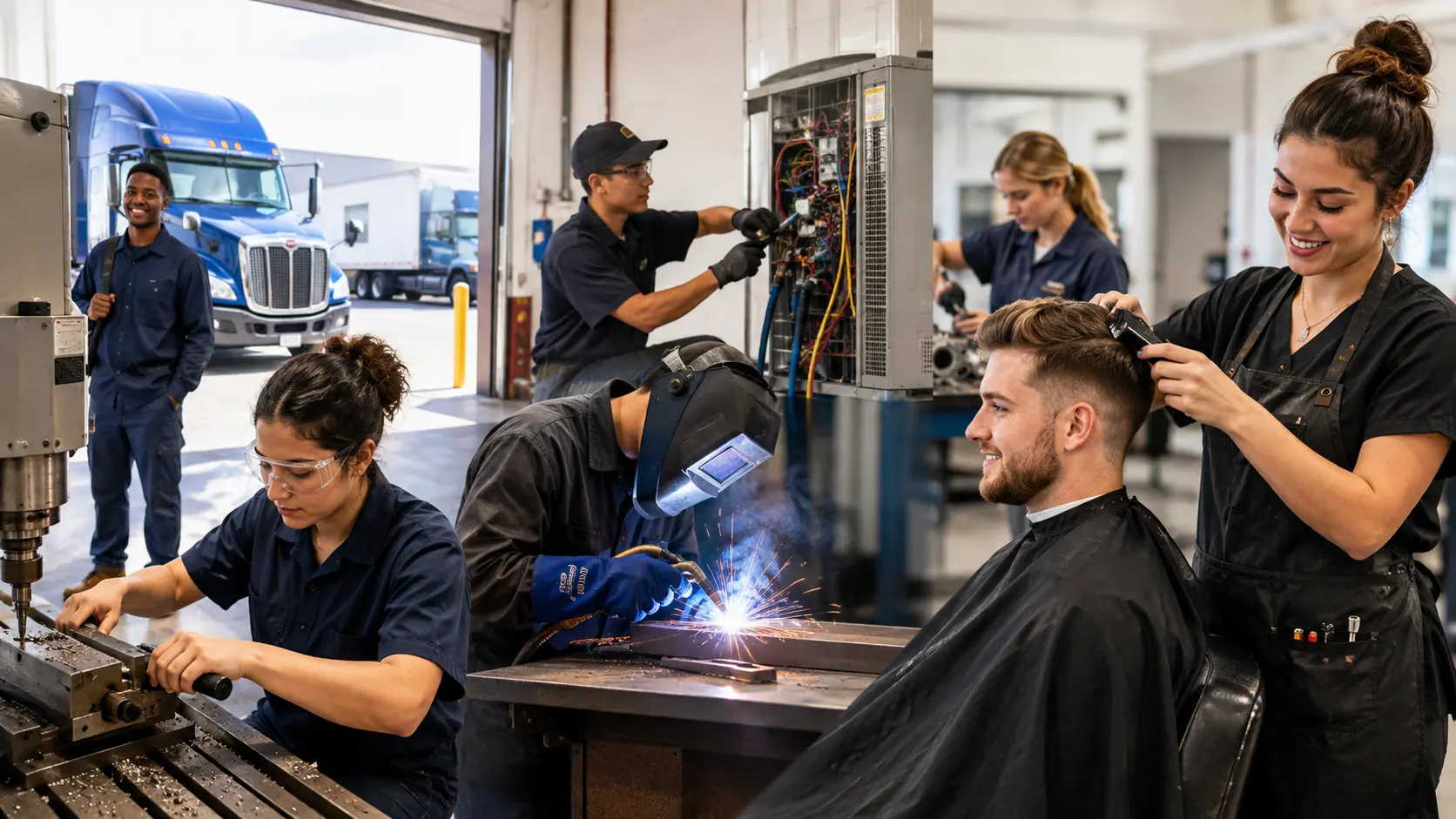
Vocational pathways can lead toward careers in commercial driving, HVAC, welding, CNC machining, barbering, cosmetology, diesel technology, electrical work, and many other fields. The right path depends on your interests, goals, training requirements, and the kind of work you want to do.
This guide explains what vocational training pathways are, how they work, examples of common pathways, what credentials may be required, and how to choose a direction that fits your future.
What Are Vocational Training Pathways?
A vocational training pathway is a structured route that helps a person prepare for a specific career through job-focused education, hands-on training, required credentials, and employment preparation.
A pathway is broader than a single training program. It can include:
- Choosing an occupation
- Finding the right training provider
- Learning technical and practical skills
- Completing required licenses, certifications, or exams
- Preparing for employment
- Continuing to build skills after entering the workforce
This is why vocational education is often attractive to people who prefer practical learning or want training tied directly to an occupation.
MT Hope House of Texas helps community members explore these options through its Skilled Trades & Vocational Training Pathways program. Support may include training referrals, enrollment assistance, career counseling, and employment placement support after training completion.
How Does a Vocational Training Pathway Work?
No two career pathways are exactly the same, but most follow a similar process.
1. Start With the Career, Not Just the Course
Before enrolling in a program, think about the type of work you want to do.
Ask yourself:
- Do I enjoy working with tools, machines, technology, vehicles, or people?
- Would I rather work indoors, outdoors, on the road, or in a shop?
- What schedule fits my family and responsibilities?
- Does the occupation have physical requirements I can meet?
- What licenses or certifications will I need?
- What opportunities exist in my local area?
Career counseling can be helpful because the most available course is not always the best long-term fit. MT Hope House helps participants consider their strengths, goals, lifestyle, and career direction before choosing a pathway.
2. Find the Appropriate Training
Vocational training can happen through trade schools, technical colleges, community colleges, apprenticeships, employer programs, and other approved training providers.
The format depends on the occupation. Some careers require formal classroom and practical training. Others combine technical education with an apprenticeship or on-the-job learning.
Before enrolling, check what type of training employers and regulators actually require for the occupation you want to enter.
3. Build Hands-On Skills
A major advantage of vocational education is its practical focus.
Students may learn how to:
- Use tools and equipment
- Follow workplace safety procedures
- Troubleshoot problems
- Complete job-related tasks
- Read technical information
- Work to industry standards
Hands-on training helps connect what you learn in class with what you may eventually be expected to do in the workplace.
4. Complete Any Required Credentials
Finishing a training program does not automatically qualify someone for every occupation. Requirements vary by career and location.
For example, people seeking a Class A or Class B commercial driver’s license for the first time generally must complete applicable Entry-Level Driver Training through a provider listed with the Federal Motor Carrier Safety Administration before taking the CDL skills test.
HVAC technicians who maintain, service, repair, or dispose of equipment in ways that could release regulated refrigerants must earn EPA Section 608 Technician Certification.
Understanding these requirements before enrolling can save time and help you choose an appropriate training program.
Examples of Vocational Training Pathways
Vocational education covers many industries. Here are several common pathways and what they can involve.
CDL and Commercial Truck Driving
A CDL pathway prepares students for work operating commercial vehicles. Training may include vehicle inspections, safety, federal and state rules, backing and maneuvering, and behind-the-wheel practice.
Heavy and tractor-trailer truck drivers must hold a commercial driver’s license. The U.S. Bureau of Labor Statistics projects about 214,500 openings for heavy and tractor-trailer truck drivers each year, on average, from 2025 to 2035. Many of those openings are expected to result from workers changing occupations or leaving the workforce.
This pathway may appeal to people who are comfortable driving for long periods, working independently, and following detailed safety requirements.
HVAC and Refrigeration
HVAC technicians work with heating, air-conditioning, ventilation, and refrigeration systems.
Training can cover:
- Electrical components
- System diagnostics
- Installation
- Maintenance
- Refrigeration
- Safety
- Troubleshooting
BLS projects employment for heating, air-conditioning, and refrigeration mechanics and installers to grow 11 percent from 2025 to 2035, compared with 3 percent for all occupations.
People interested in mechanical systems, problem-solving, and hands-on service work may find this pathway worth exploring.
Welding
Welders use heat and specialized equipment to join or repair metal components used in construction, manufacturing, infrastructure, and other industries.
BLS says welders typically need a high school diploma or equivalent combined with technical and on-the-job training. It projects about 40,300 openings per year, on average, from 2025 to 2035.
Welding can suit people who enjoy precise hands-on work and are comfortable following technical drawings, safety procedures, and quality standards.
CNC Machining
CNC stands for computer numerical control.
A CNC machines use programmed instructions to cut and shape materials with a high level of precision.
A CNC or machining pathway may include blueprint reading, measurements, machine setup, quality control, programming basics, and manufacturing safety.
Training routes vary. BLS notes that machinists may learn through vocational schools, community or technical colleges, apprenticeships, and on-the-job training. Although overall employment for machinists and tool and die makers is projected to decline slightly from 2025 to 2035, BLS still projects about 30,400 openings per year, largely because workers will need to be replaced.
This is an important reminder that terms such as “high demand” should be evaluated occupation by occupation instead of being applied to every skilled trade.
Barbering
Barbering combines technical skill with customer service. Training can include haircutting, styling, sanitation, tools, safety, and business practices.
In Texas, applicants for a Class A Barber license must complete a 1,000-hour course at a licensed school and pass written and practical examinations.
This path may fit people who enjoy working directly with clients and want to develop both technical and customer-service skills.
Cosmetology
Cosmetology can include hair care, styling, coloring, sanitation, client service, and related beauty services.
Texas requires Cosmetology Operator applicants to complete 1,000 hours of instruction at a licensed school and pass written and practical exams.
Nationally, BLS projects employment of barbers, hairstylists, and cosmetologists to grow 7 percent from 2025 to 2035, with about 80,300 openings per year on average.
What Other Vocational Careers Can You Explore?
Vocational training is not limited to the pathways above. Other options may lead toward careers in:
- Diesel and truck service
- Electrical trades
- Construction
- Plumbing
- Automotive technology
- Industrial maintenance
- Manufacturing
- Logistics
- Healthcare support
- Information technology
Available programs vary by location and training provider.
Before enrolling, verify the program’s requirements, credentials, total cost, schedule, training format, and connection to the occupation you want to enter.
Vocational Training vs. a Four-Year College Degree
Vocational training and college can both be valuable, but they often serve different goals.
| Factor | Vocational Training | Four-Year College |
| Main focus | Career-specific skills | Broader academic or professional study |
| Learning style | Often hands-on and technical | Often classroom and academic |
| Length | Varies by occupation and program | Usually multiple years |
| Credential | May lead to a certificate, diploma, license, or certification | Bachelor’s degree |
| Career connection | Usually tied to a particular occupation | May be broad or career-specific |
One option is not automatically better than the other.
The right choice depends on the career you want, the education it requires, your finances, your timeline, and the way you learn best.
How Do You Choose the Right Vocational Training Pathway?
Before committing to a program, research both the training and the career it is designed to support.
Consider these questions:
- What does a normal workday look like?
- Is the work physically demanding?
- What education, license, certification, or apprenticeship is required?
- How long is the training?
- What will the full program cost?
- Is financial assistance available?
- Are employers hiring for these skills in your area?
- Does the career offer opportunities to grow?
- Does the work schedule fit your life?
Also verify that the school or training provider meets any licensing, accreditation, approval, or regulatory requirements that apply to the occupation.
If you are unsure where to start, MT Hope House’s vocational pathway support may help eligible participants explore career options, understand training referrals, navigate enrollment requirements, and connect with training partners.
Training Is Only Part of the Path to Employment
Learning technical skills is important, but getting and keeping a job may require additional preparation.
Someone may also need support with:
- Resume development
- Interview preparation
- Job searching
- Professional communication
- Employer expectations
- Transportation
- Career planning
- Other barriers that affect training or employment
For more practical employment guidance, see How Job Readiness Programs Help People Rebuild Career Confidence. MT Hope House’s job readiness support is designed to help people prepare for employment based on their goals, experience, abilities, and barriers.
Training also does not happen separately from the rest of life. Transportation problems, food insecurity, housing concerns, or family responsibilities can make it harder to complete a program or maintain employment.
MT Hope House operates as a Community Resource Hub, combining workforce development with education, food assistance, supportive services, and Community Outreach & Resource Navigation to help people identify practical next steps when needs overlap.
You can also learn more about the connection between employment and long-term stability in Why Workforce Development Matters for Long-Term Stability.
Take the Next Step Toward a Career Path
Choosing a vocational pathway is not simply about finding the shortest training program. It is about finding a career direction that matches your abilities, interests, responsibilities, and long-term goals.
Take time to understand the occupation, compare training options, verify credential requirements, and think about what you want your work life to look like.
If you are considering a skilled trade or vocational career but are unsure which step comes next, MT Hope House can help you explore available options. Through career counseling, training referrals, enrollment assistance, and employment support after training when available, the goal is to help participants move forward with greater clarity and direction.
Explore Training through MT Hope House’s Skilled Trades & Vocational Training Pathways.
Frequently Asked Questions
What is a vocational training pathway?
A vocational training pathway is a route toward a specific occupation that may include career planning, technical education, hands-on practice, required credentials, and preparation for employment.
What are examples of vocational training?
Examples include CDL training, HVAC, welding, CNC machining, barbering, cosmetology, electrical training, diesel technology, plumbing, automotive training, and other career-focused programs.
How long does vocational training take?
There is no single timeline. Program length depends on the occupation, school, credential, schedule, and state or federal requirements. Always check the requirements of the specific program you are considering.
Do you need a college degree for a skilled trade?
Many skilled-trade and vocational careers do not require a bachelor’s degree. However, they may require vocational education, an apprenticeship, a certificate, a license, an industry certification, an exam, or supervised on-the-job training.
Is vocational school the same as trade school?
The terms overlap, but they are not always used in exactly the same way. Vocational training is a broad term for education that prepares people for specific occupations. A trade school is one type of training provider that often focuses on hands-on skilled careers.
Do vocational careers require licenses or certifications?
Some do and some do not. Requirements depend on the occupation and location. CDL driving, certain HVAC refrigerant work, barbering, and cosmetology are examples where specific regulatory requirements apply.
How can I tell which vocational pathway is right for me?
Start with your interests, strengths, preferred work environment, career goals, schedule, and local employment opportunities. Then research training requirements, program costs, credentials, working conditions, and realistic career prospects before choosing a program.
Can MT Hope House help me explore vocational training?
Yes. MT Hope House may help eligible participants with career counseling, training referrals, enrollment assistance, and employment placement support after training completion when available. If you need help understanding your next step, you can also contact MT Hope House for more information.
One Response